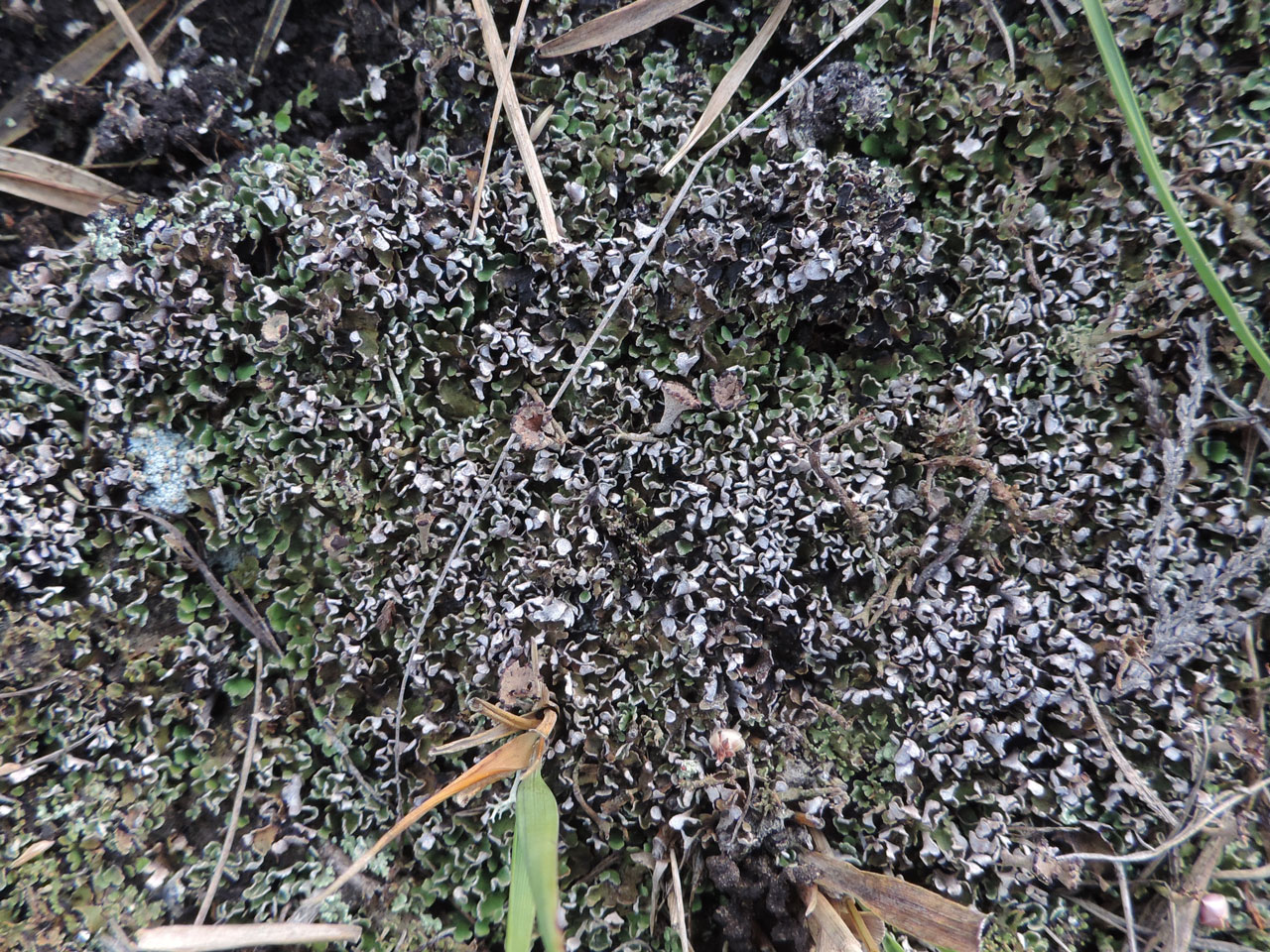
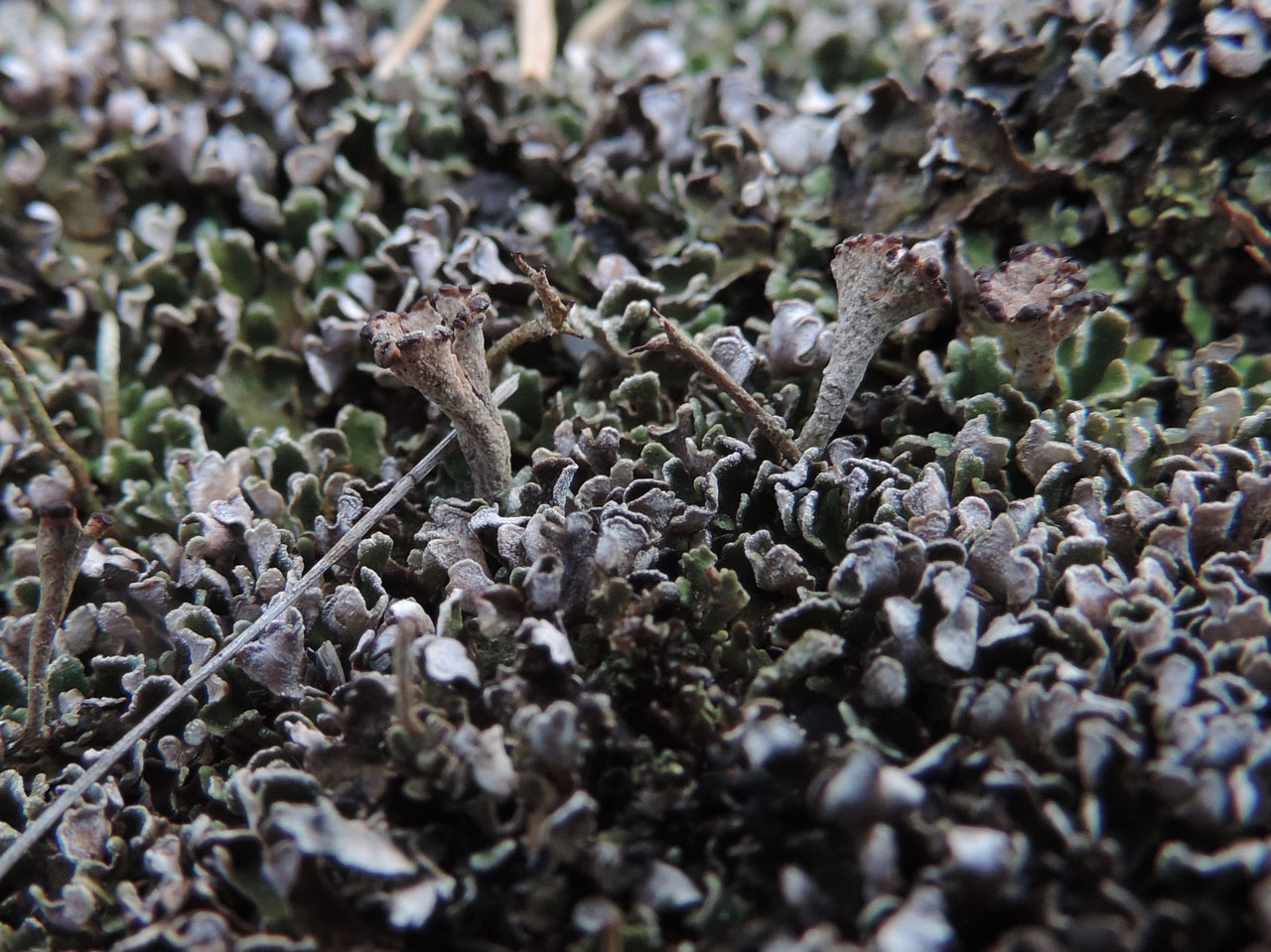
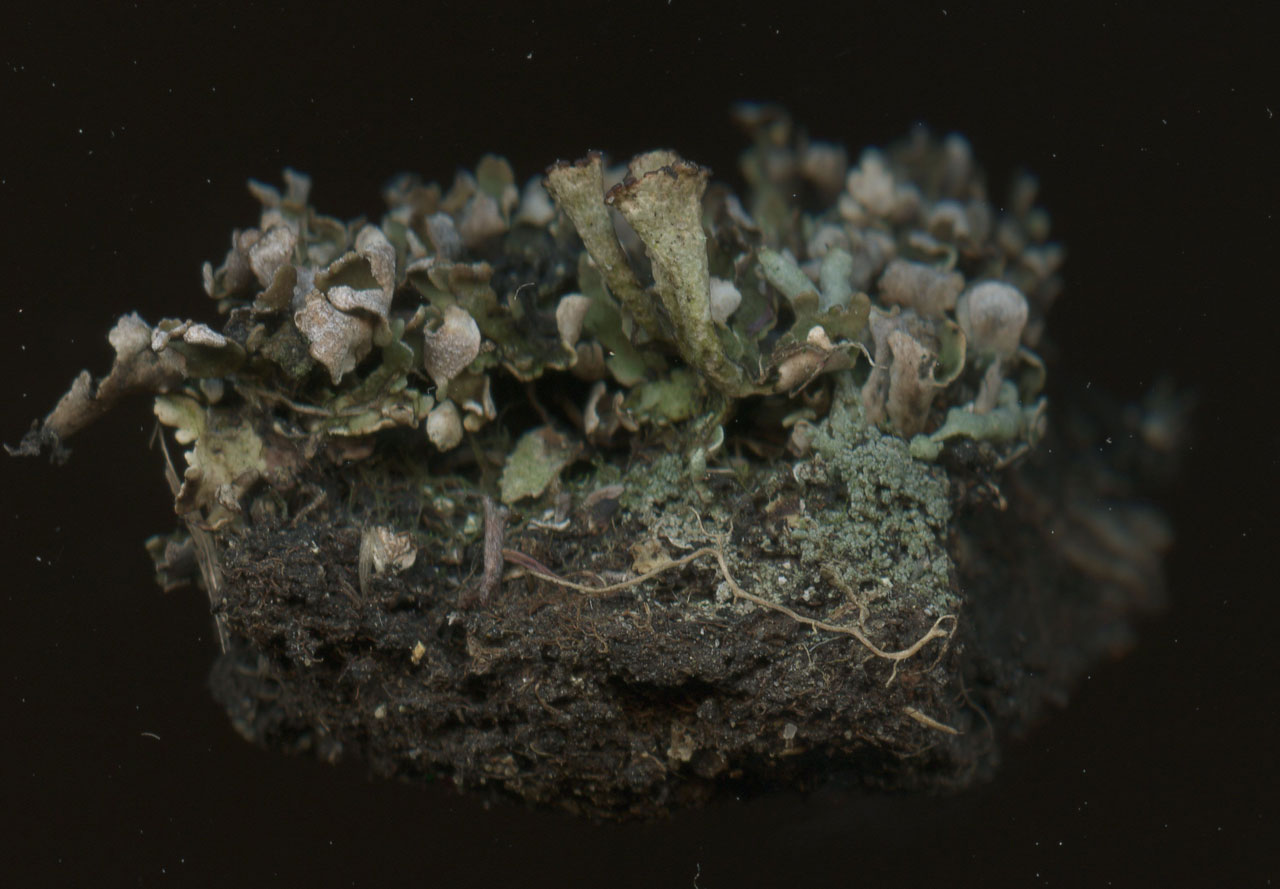
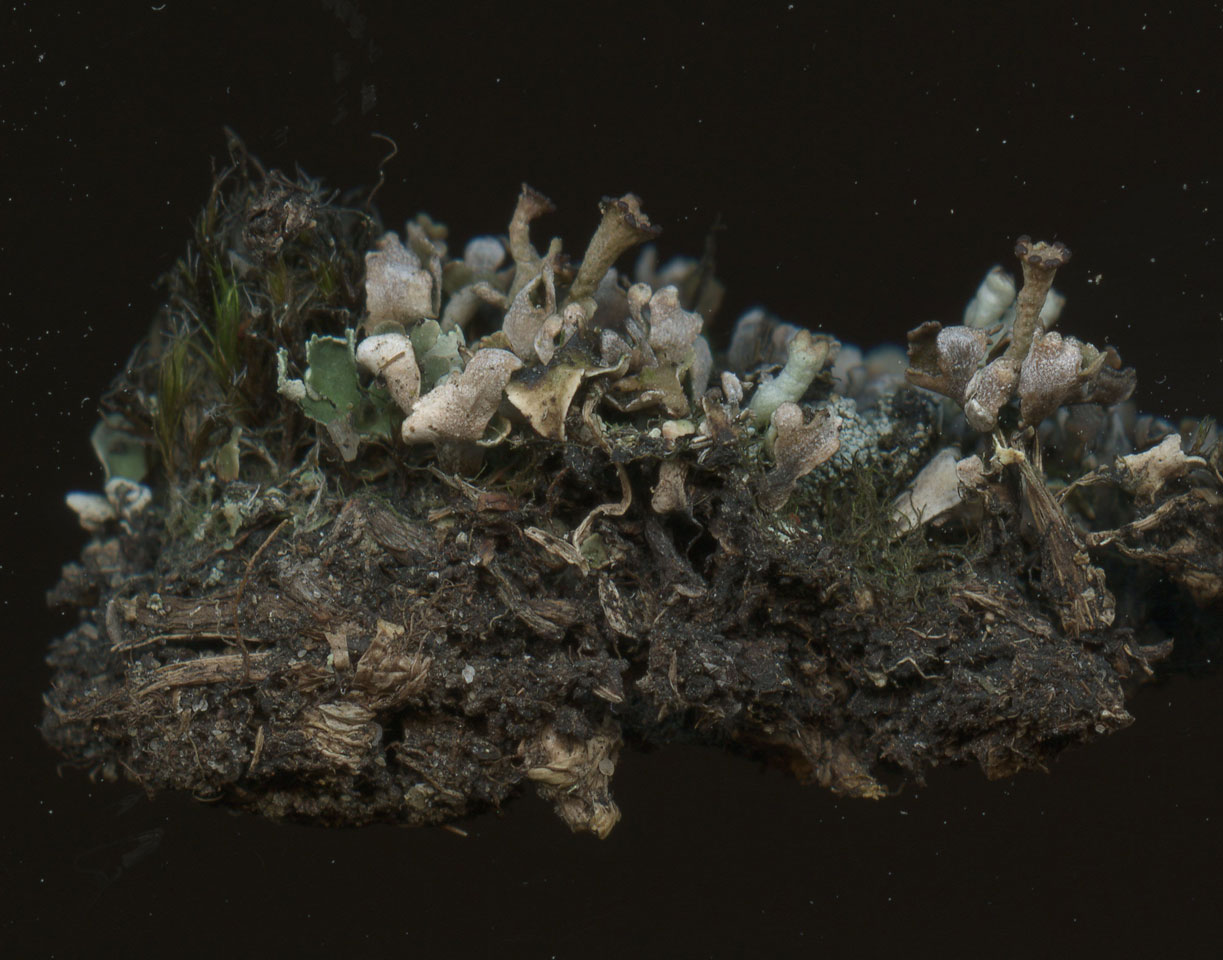
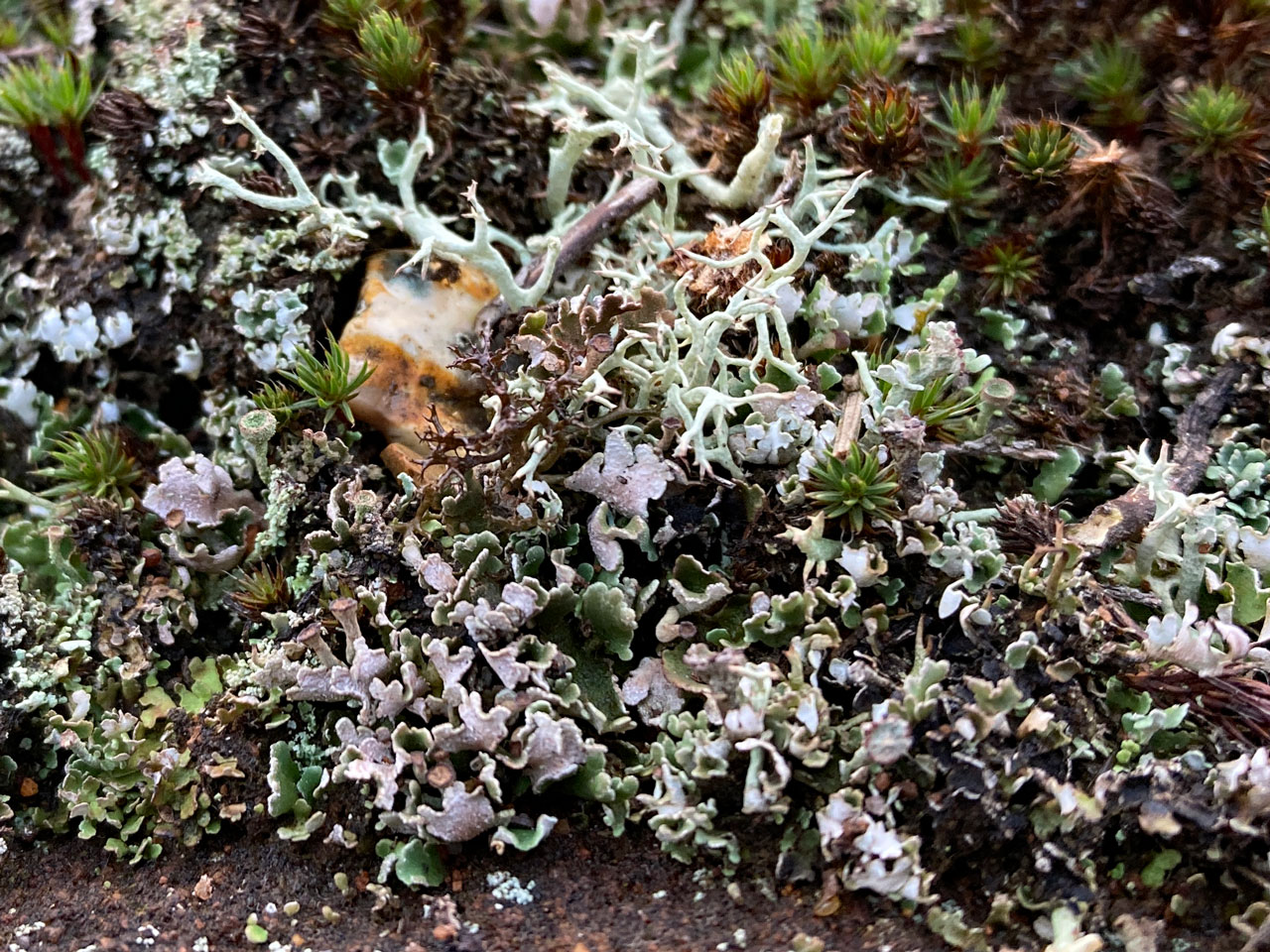
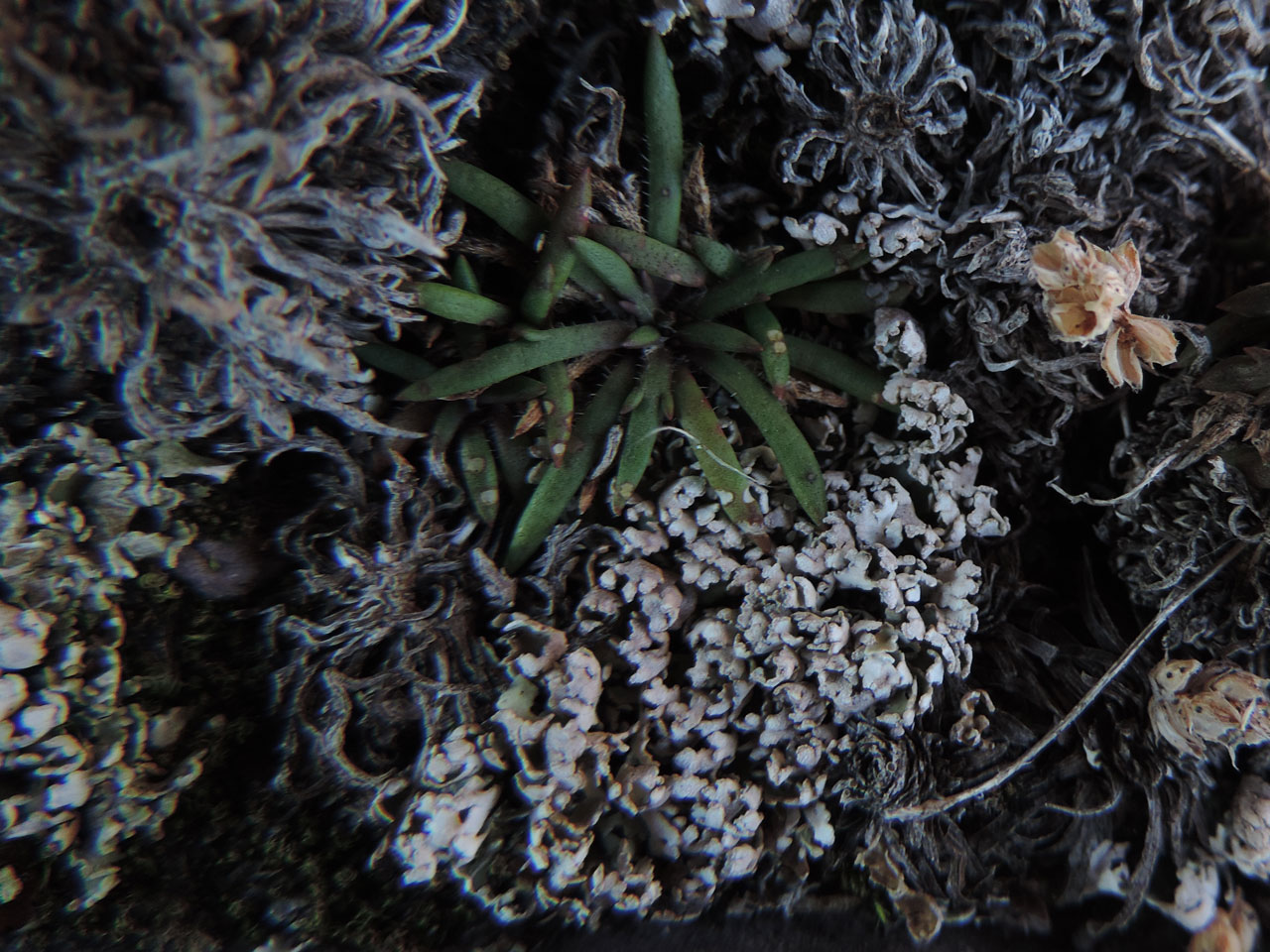
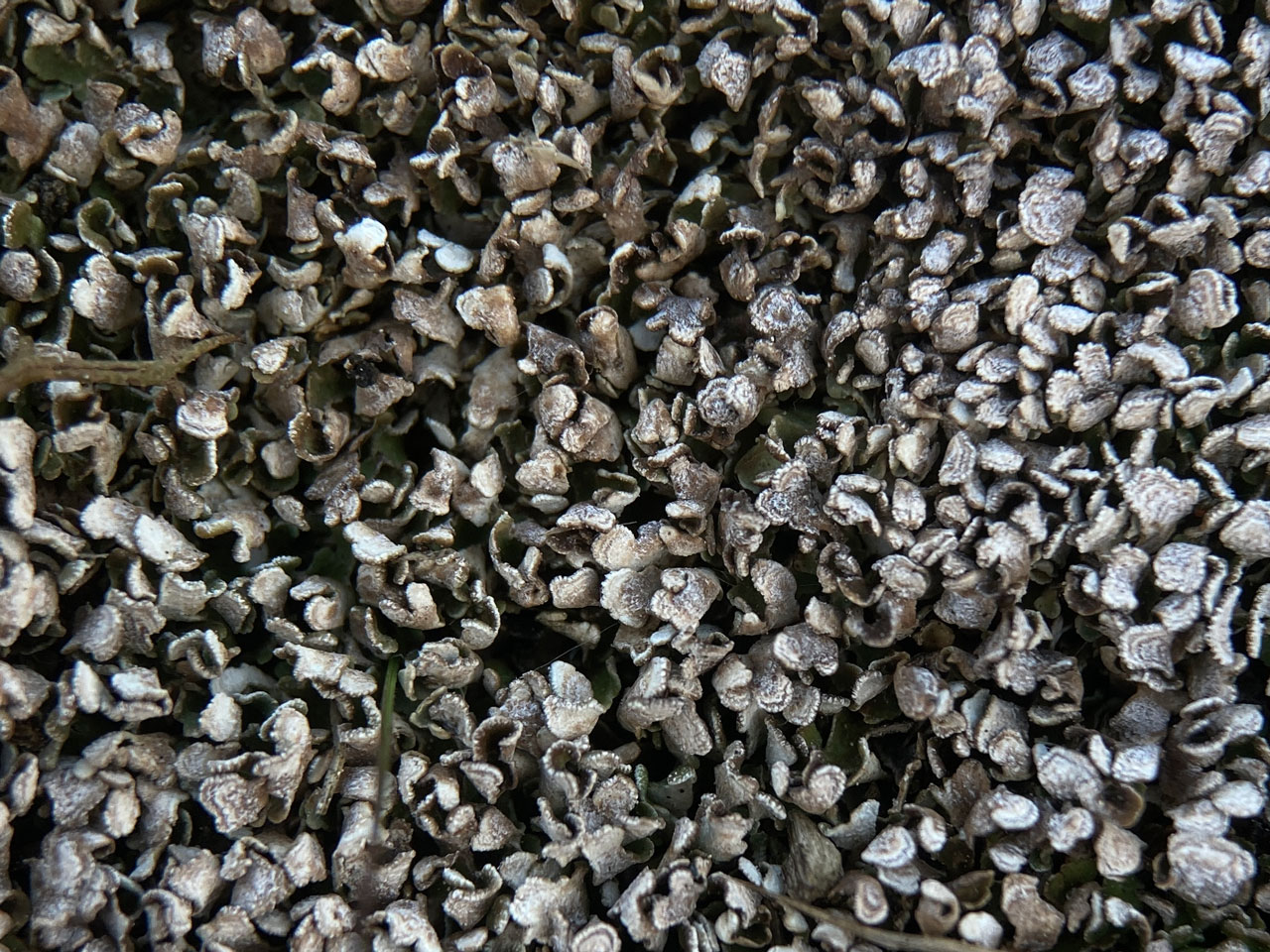
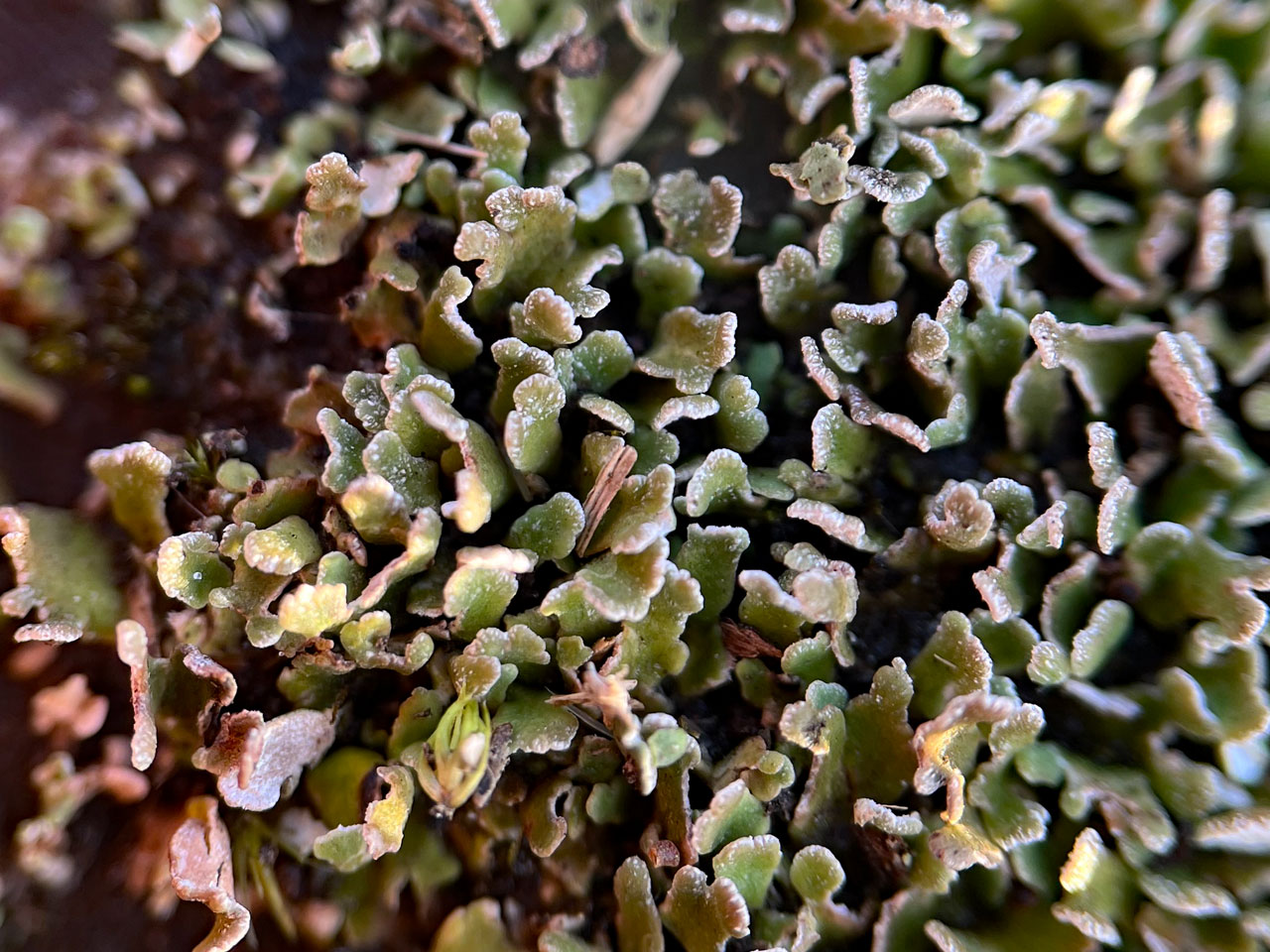
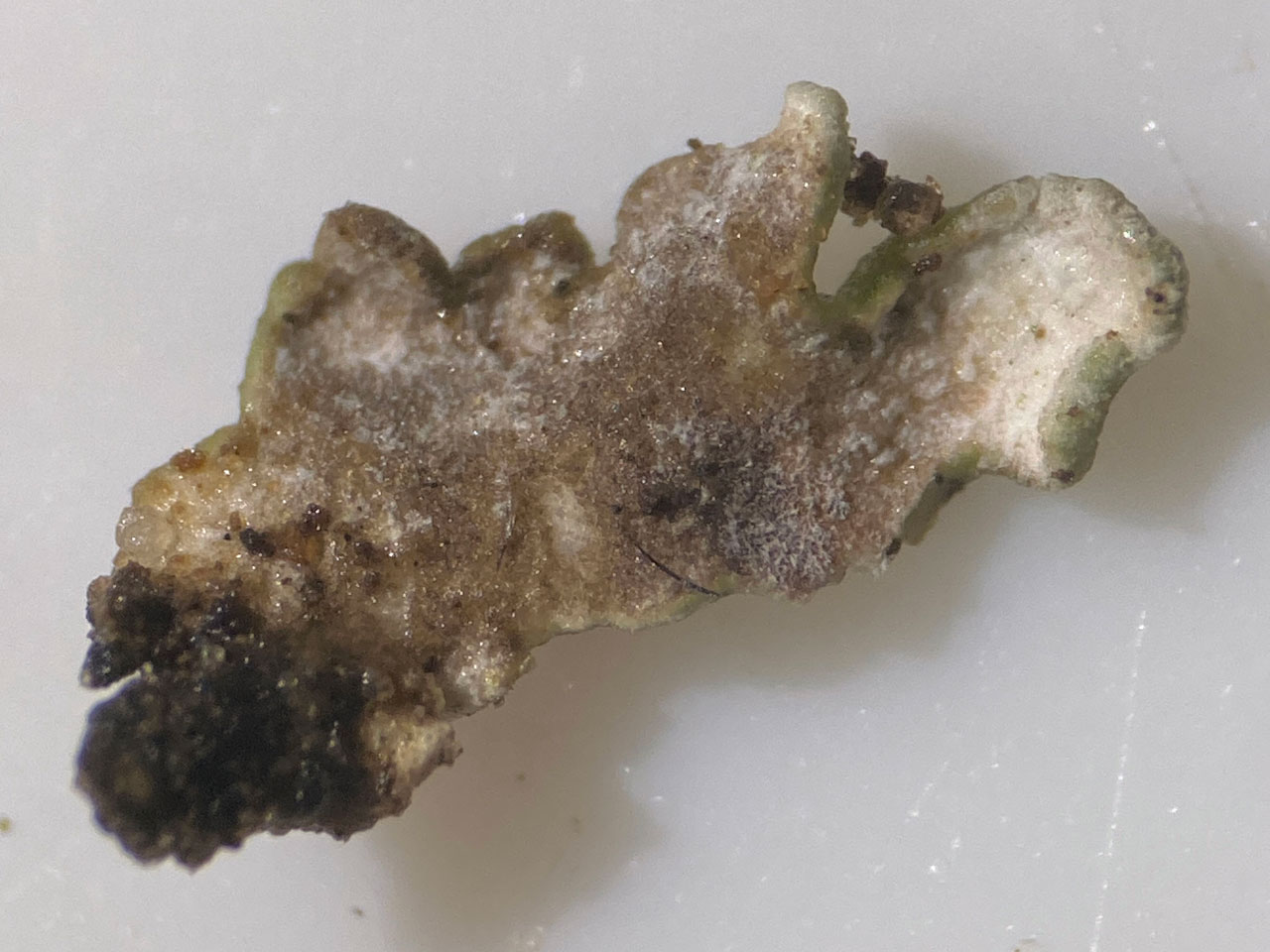
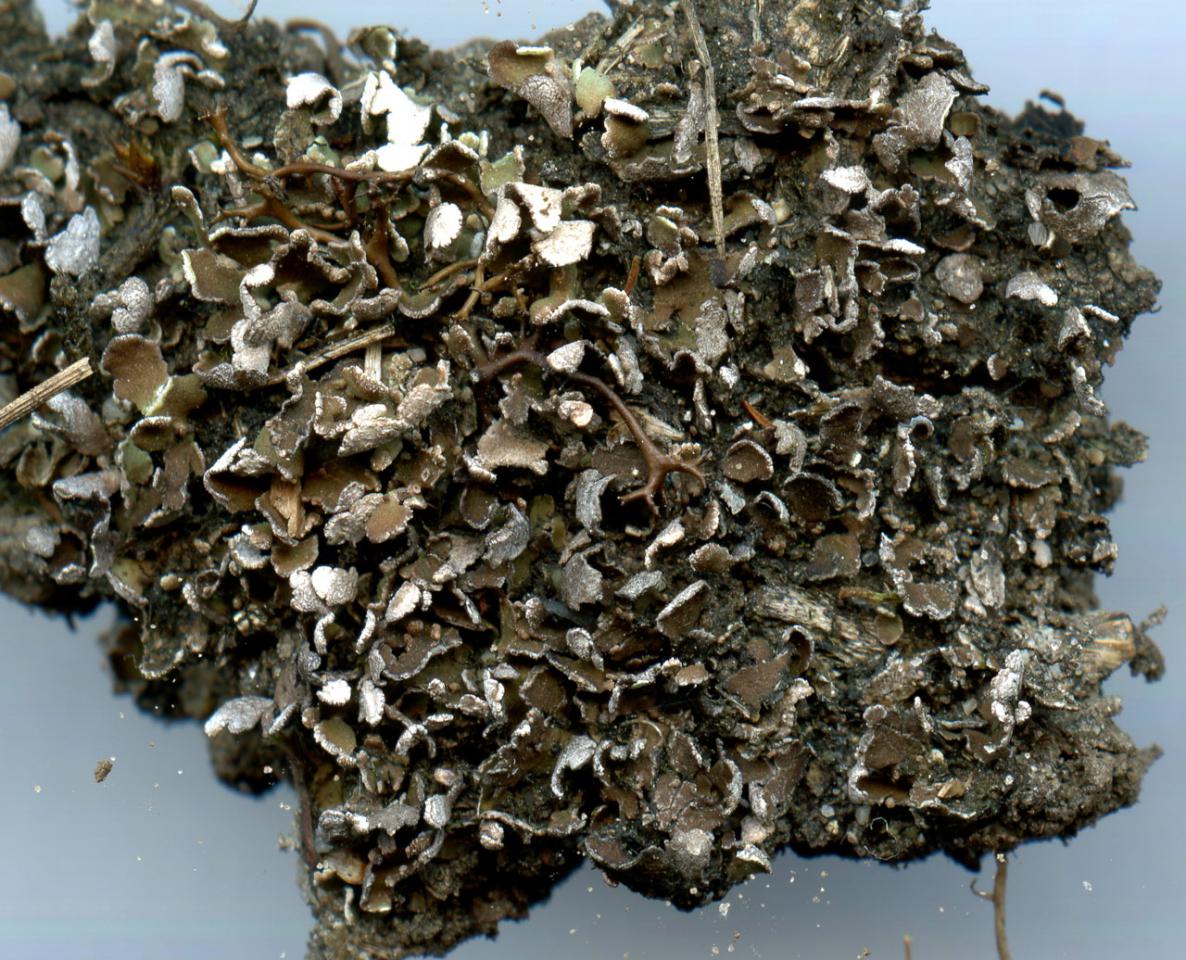
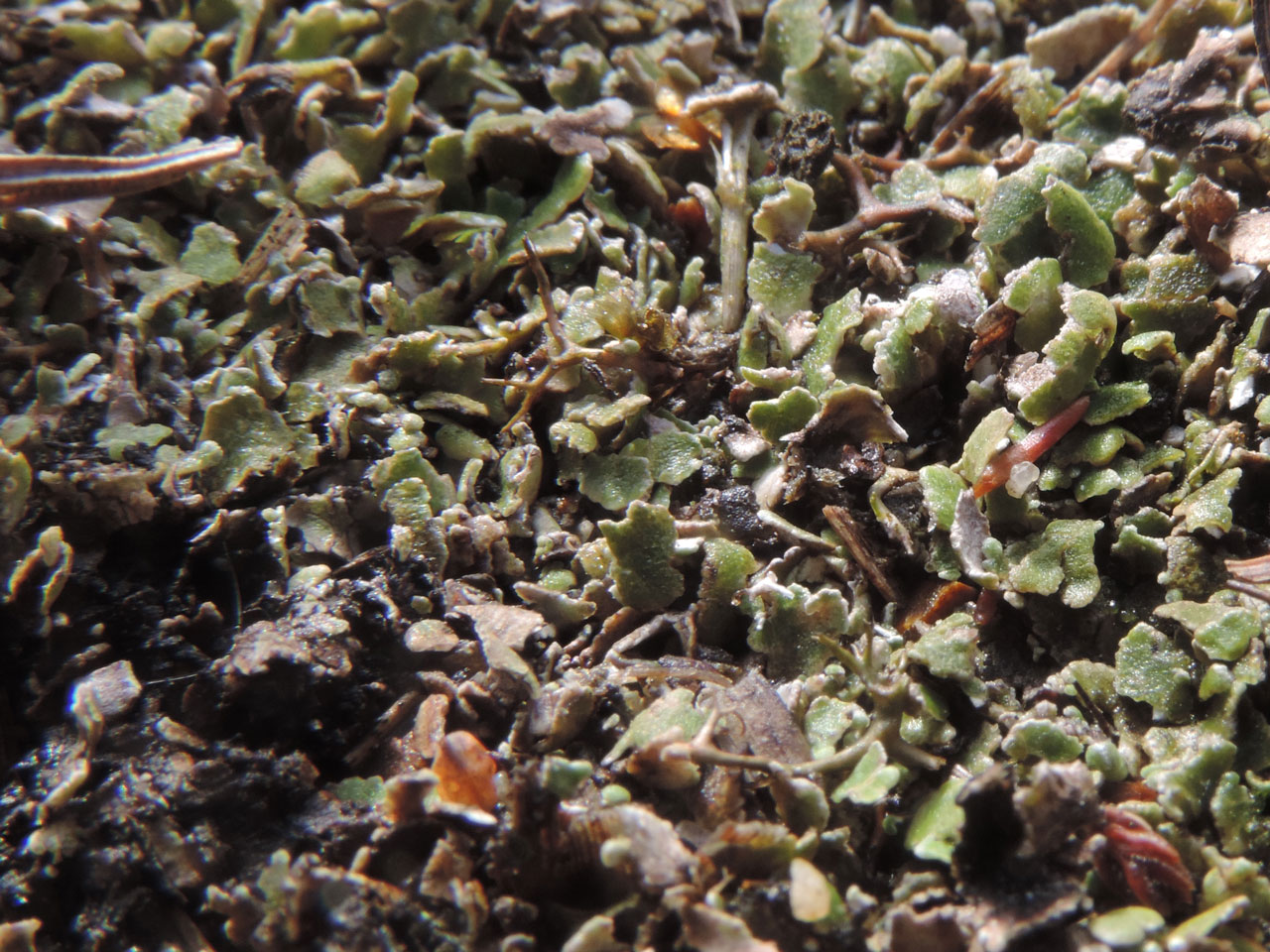
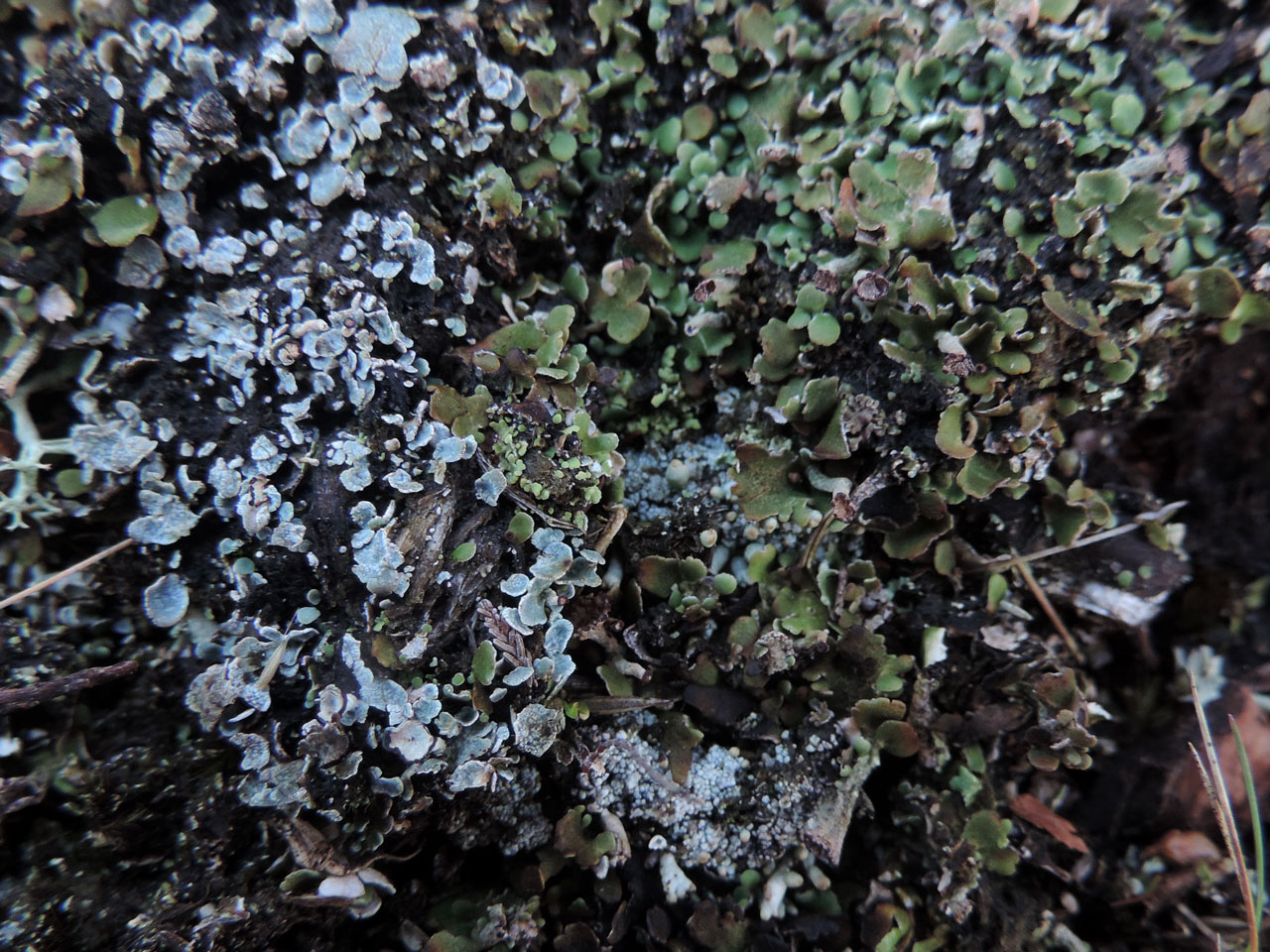
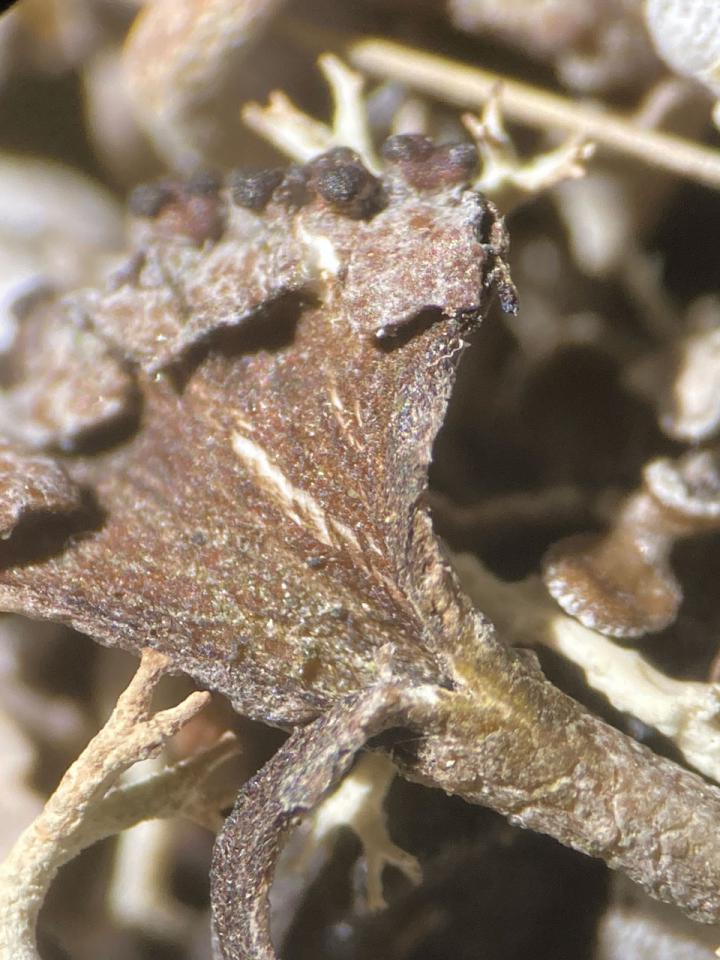
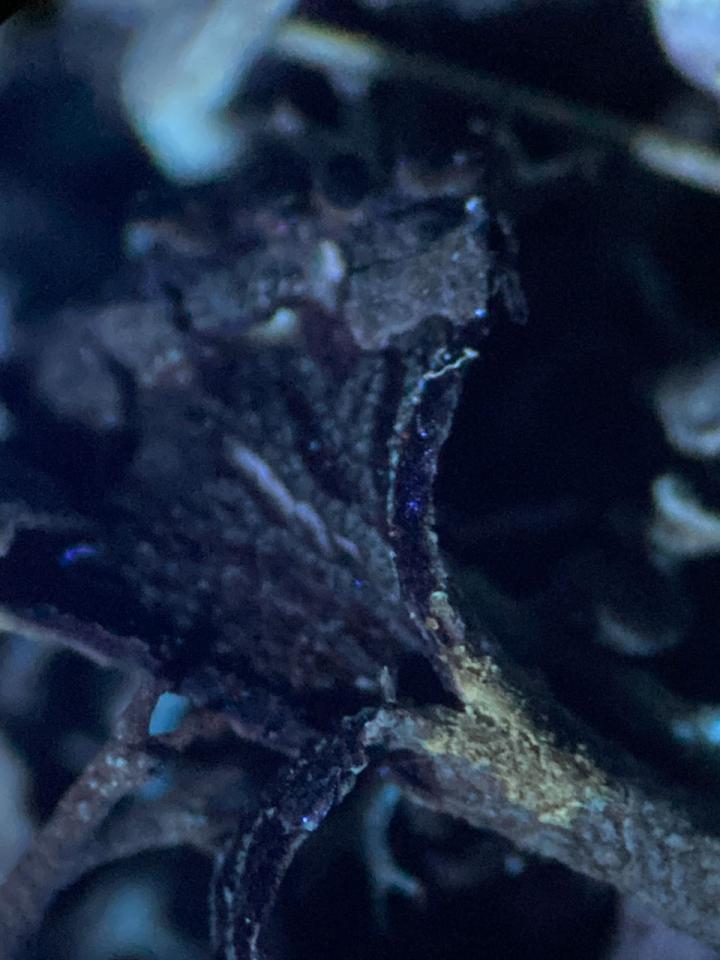
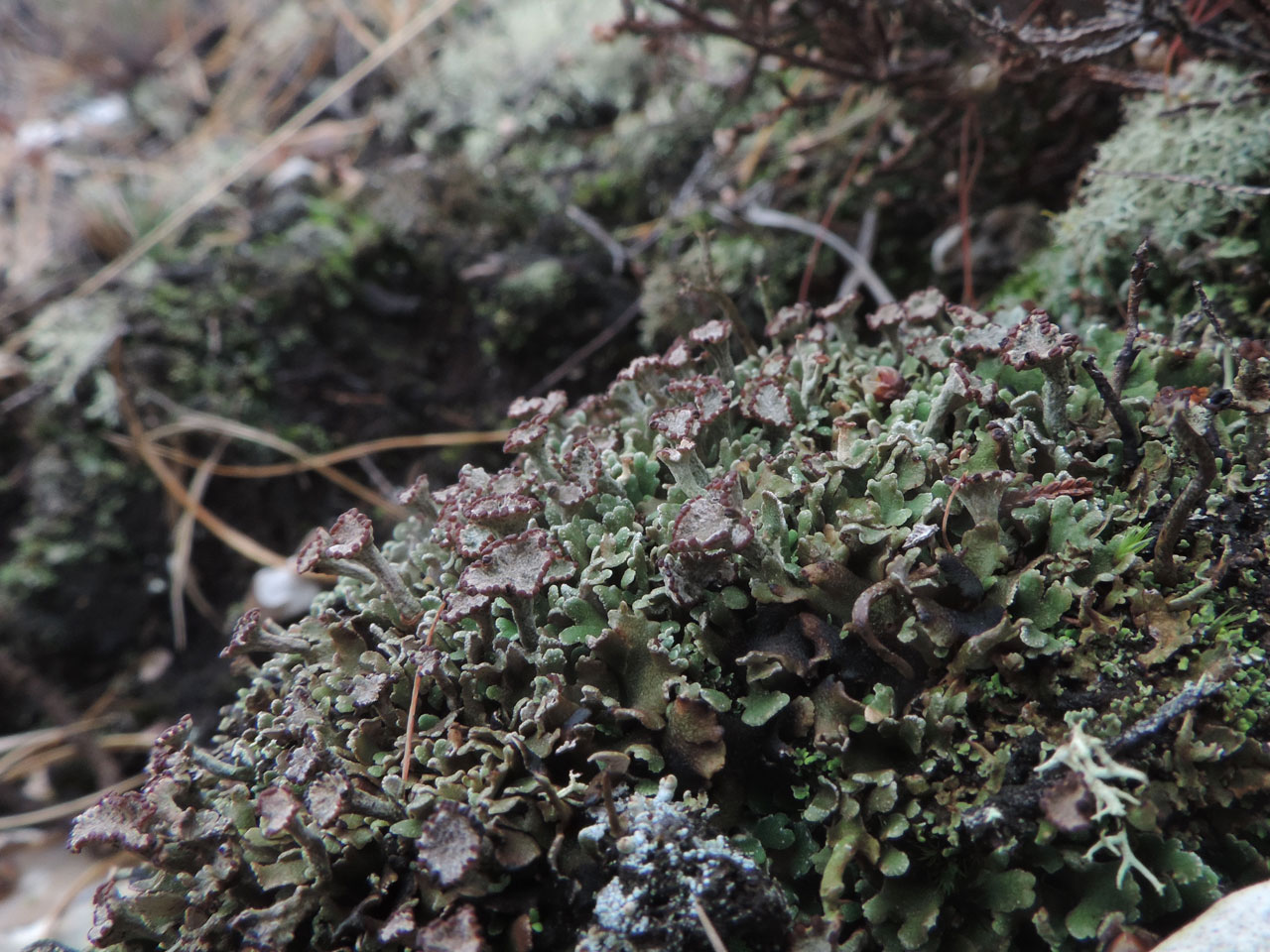
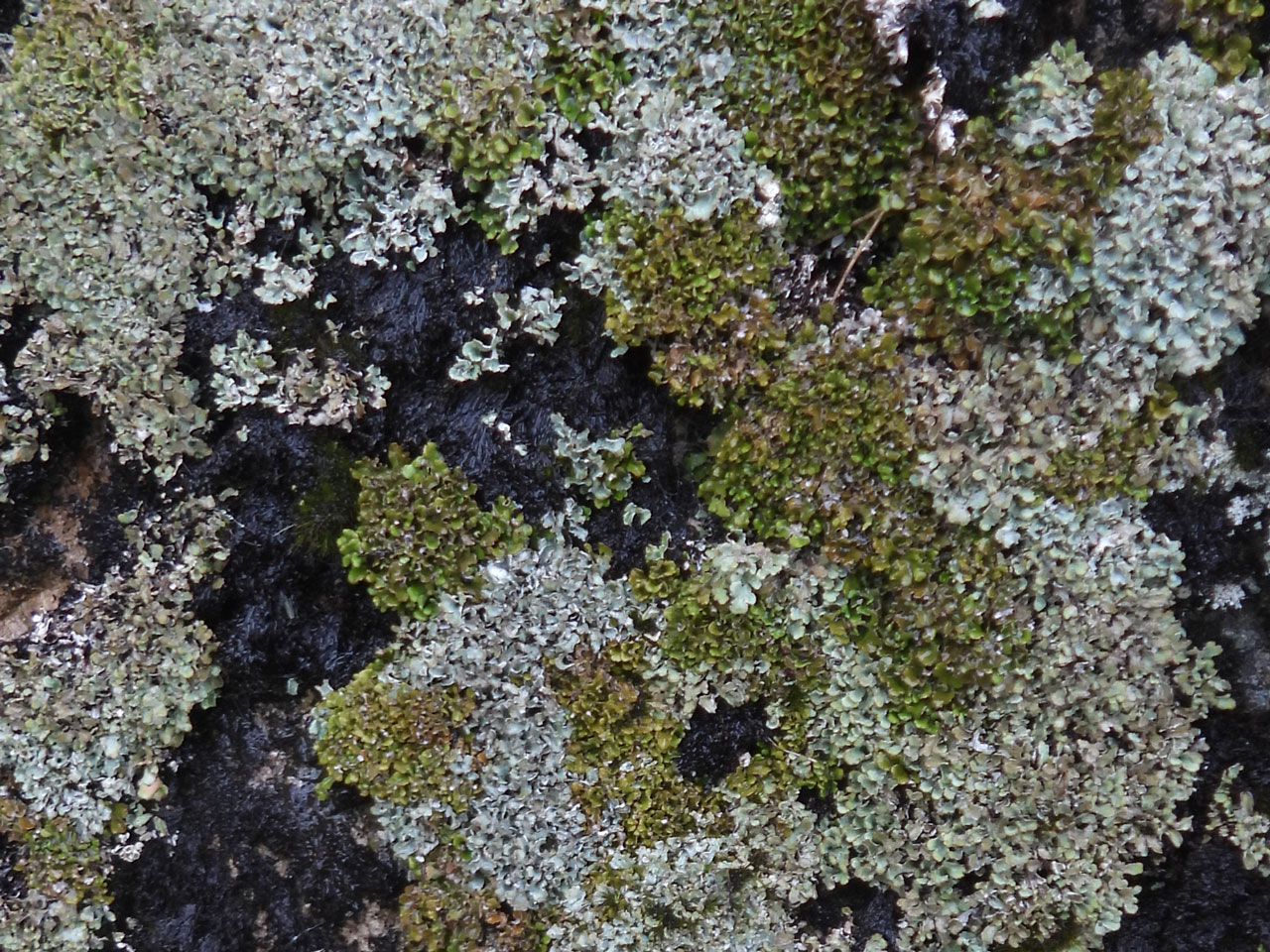
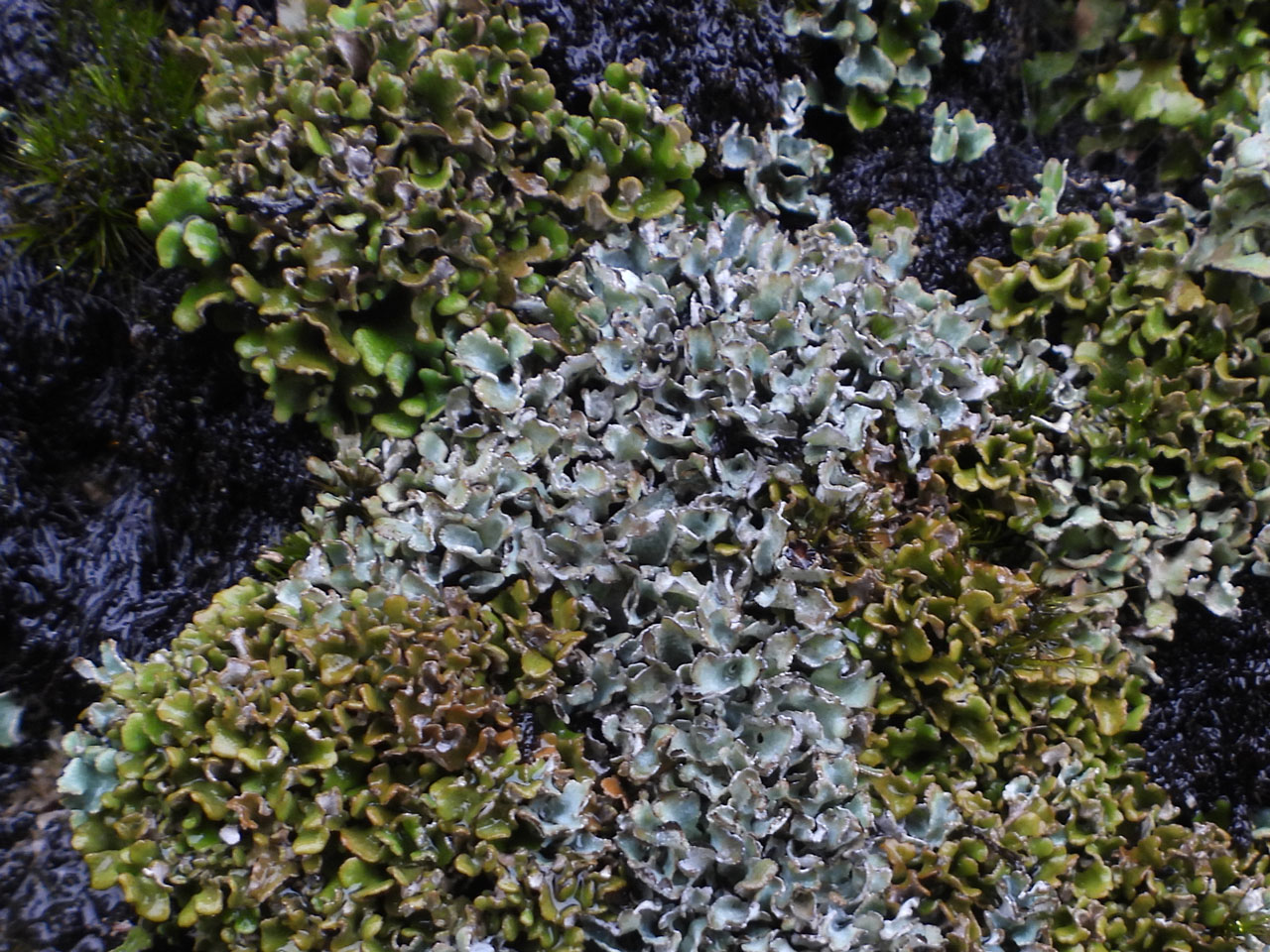
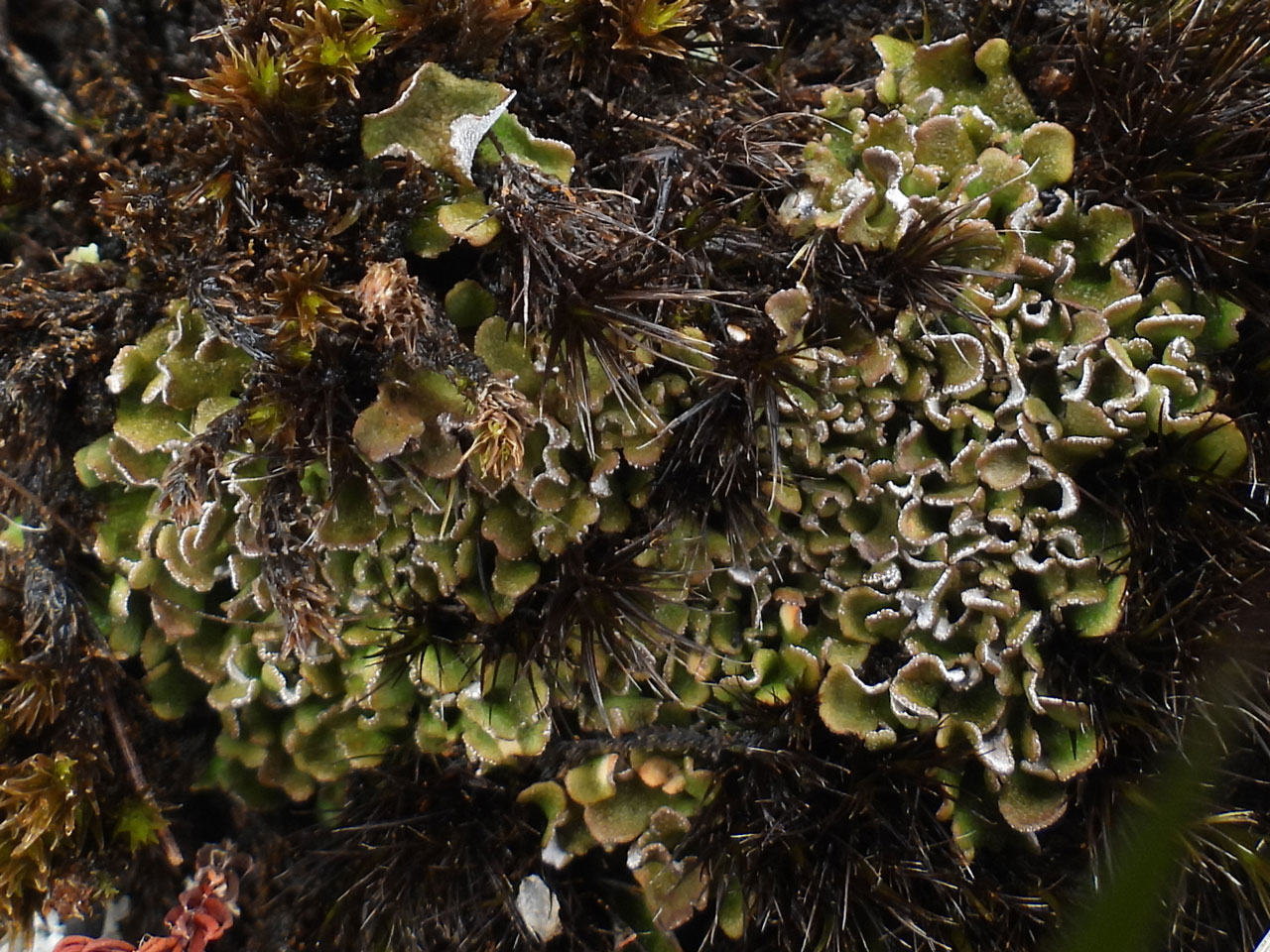
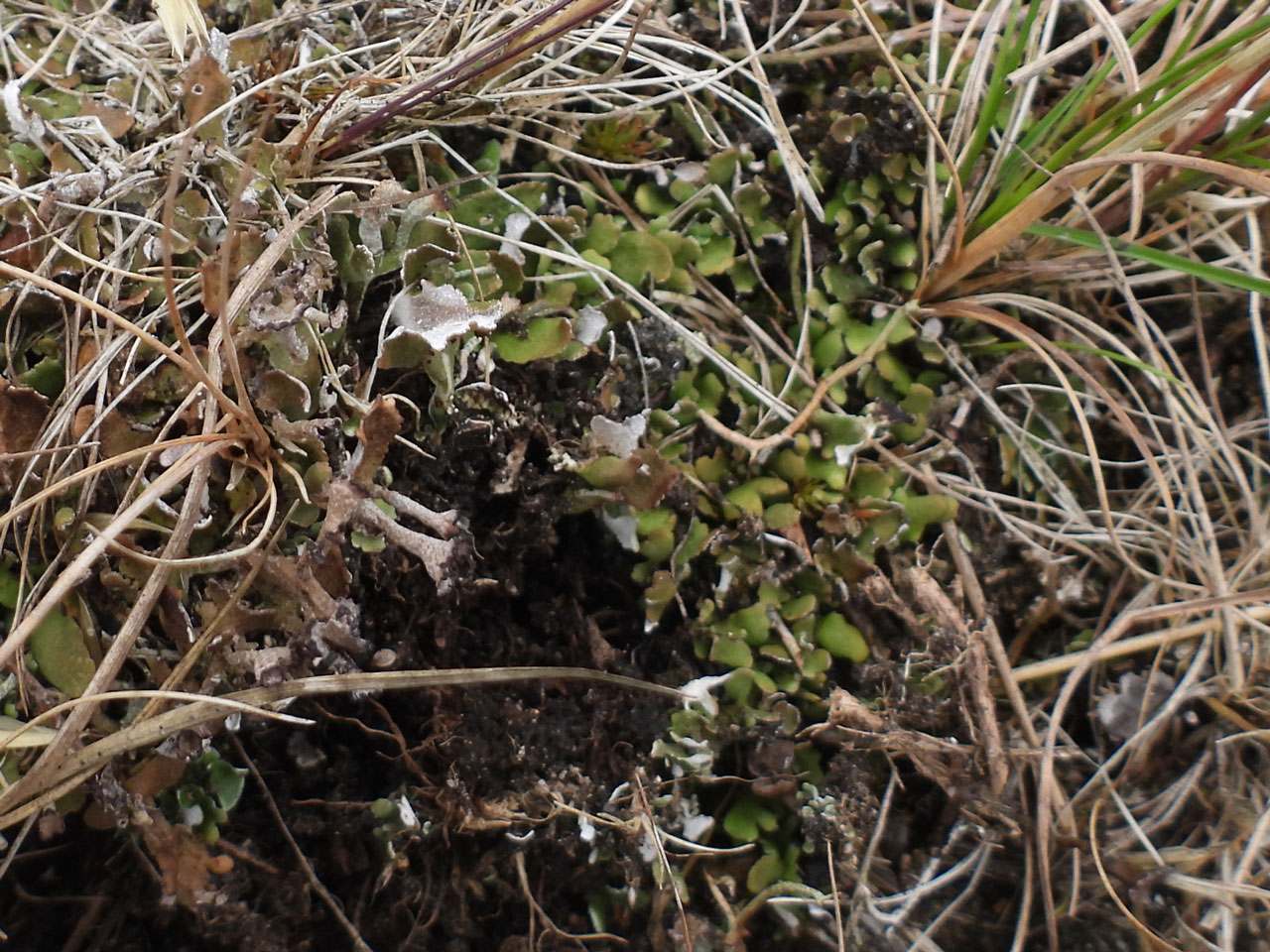
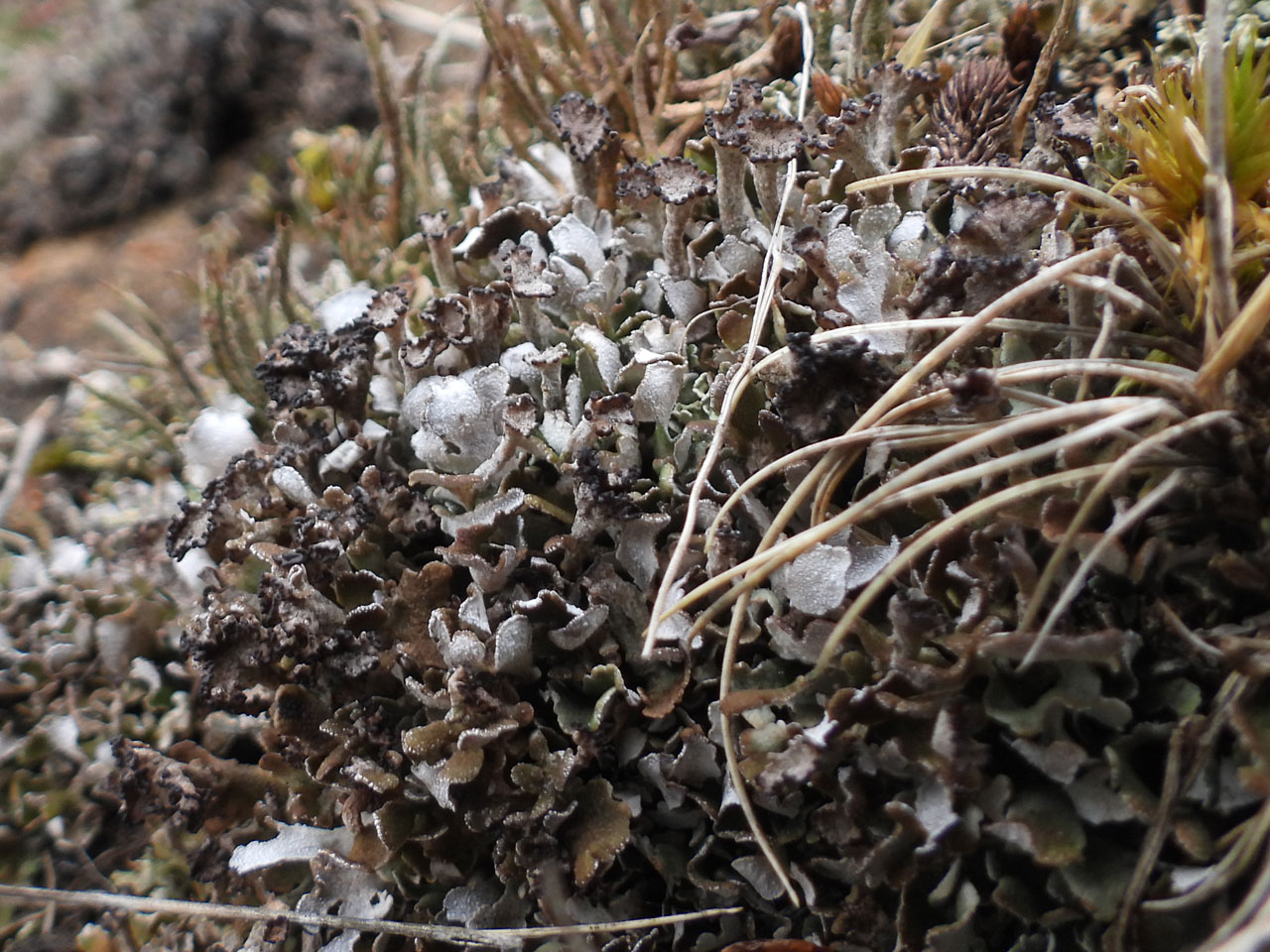
A Cladonia with the basal squamules dominant, forming dense mats, with ascending, elongated and indented squamules, which curl over when dry to expose the underside. Upper surface grey-green to brown, sometimes with pruinose tips. Lower surfaces white at tip, becoming suffused with pale to dark violet tinged grey-brown lower down. Podetia occasional, small shallow cups with a partly corticate surface. Contains atranorin, so is typically K + yellow but this can be difficult to detect.
Previously confused with what appears to be a coastal form of Cladonia symphycarpa with atranorin and fumarprotocetraric acid but lacking norstictic acid. Morphologically distinct true C. firma has been confirmed by sequencing from inland heathland and moorland habitats and when it occurs on the coast appears to be found in less maritime inland heaths than the apparent chemotype of Cladonia symphycarpa.
Predominantly occurring as sterile mats of large squamules, 4 to 10mm long, which curl over when dry to expose the underside. They have a distinctive combination of upper and lower surface colours with the upper surface grey-green (especially when wet) to brown (especially when dry), sometimes with pruinose tips and the underside white, becoming suffused with pale to dark grey brown tinged with violet lower down. The undersides are strongly tomentose. The podetia are described as rare in the better known coastal habitats but appear more frequent in the less well known inland habitats. They are small shallow cups with a some what verrucose surface and are decorticate between the verrucae. Apothecia and pycnidia rare.
Reactions: thallus C–, K+ yellow, KC–, Pd+ red, UV– (atranorin, fumarprotocetraric and ± rangiformic acids). The K+ yellow reaction can be variable and weak, but, if so, can be detected by the K/UV (dry)+ neon yellow spot test.
Easily over looked as a sterile squamule mat. Related to Cladonia subcervicornis, and can grow with it inland, but this lichen has blueish colours on the upper side of the basal squamules, along with pure white lower surfaces. The colour diffrences between the two related species are most stark when the thalli are wet. Both are K–, with the former with basal squamules with yellow upper and white lower surfaces, while the latter is smaller and lacks pruinose squamule tips.
It should be noted that Burgaz et al (2019) and Association Française de Lichénologie describe Cladonia firma as preferring substrates with an acid or subneutral pH and non-calcarious soils. The LGBI2 mentions “basic soil” as a habitat and it seems likely that records from basic soils, including high pH salt influenced maritime grasslands on acidic substrates, on the coast refer to Cladonia symphycarpa with atranorin and fumarprotocetraric acid but lacking norstictic acid. C. symphycarpa has often more narrowly elongated squamules with a pale grey-green upper surface, with the lower surface starkly white but the edges sometimes darkened with violet tones and are more weekly tomentose underside giving a flocked effect.
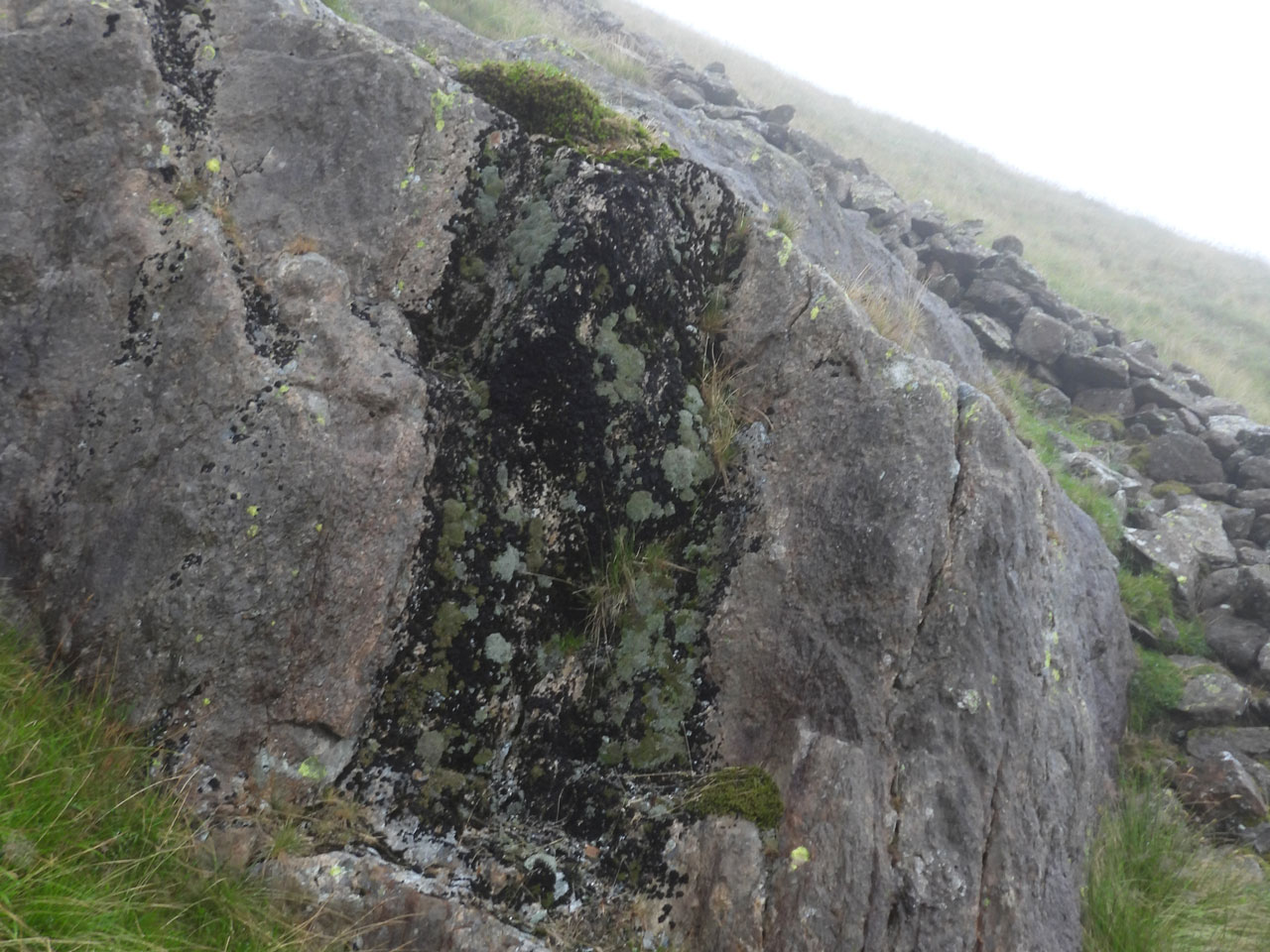
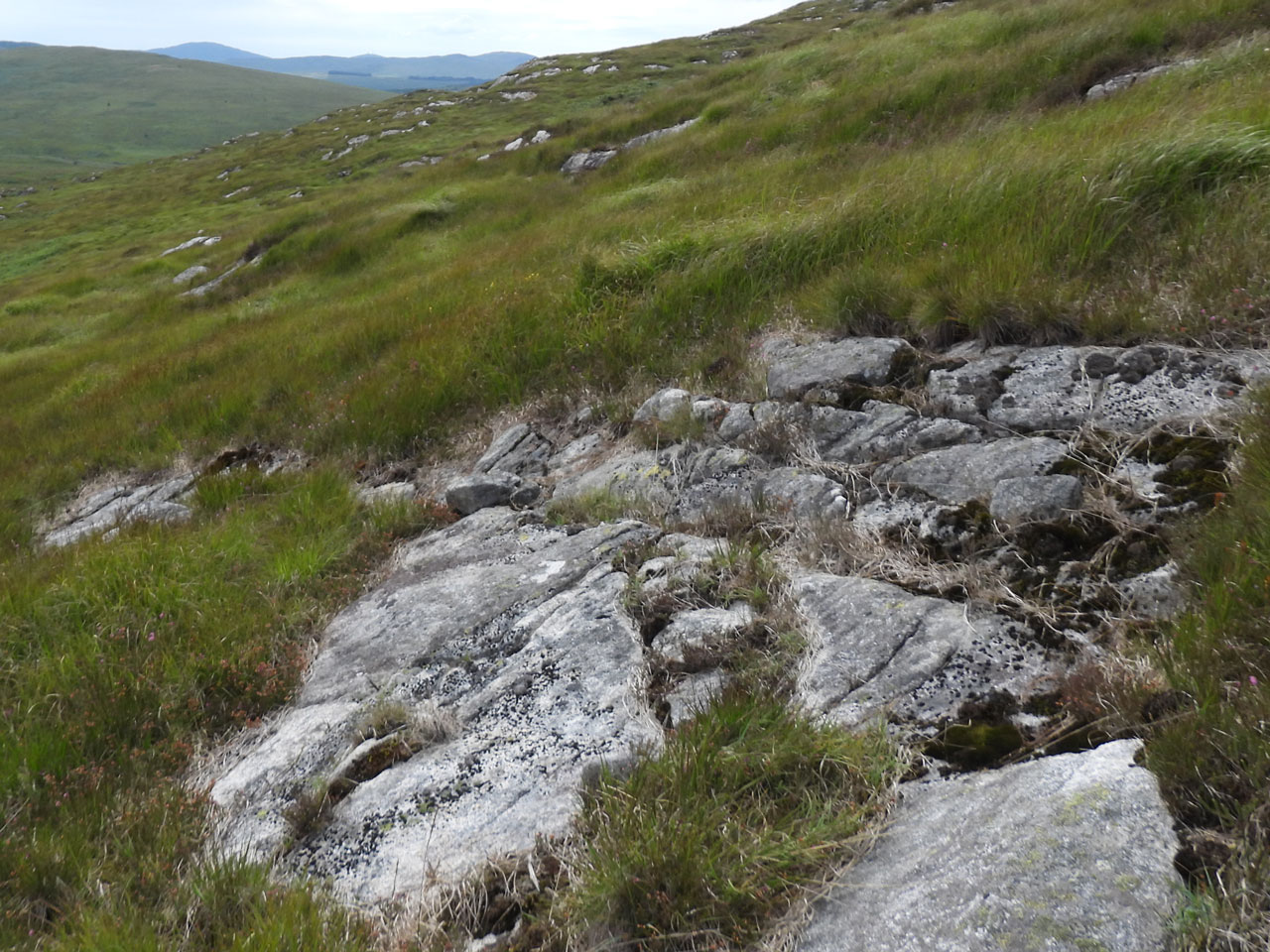
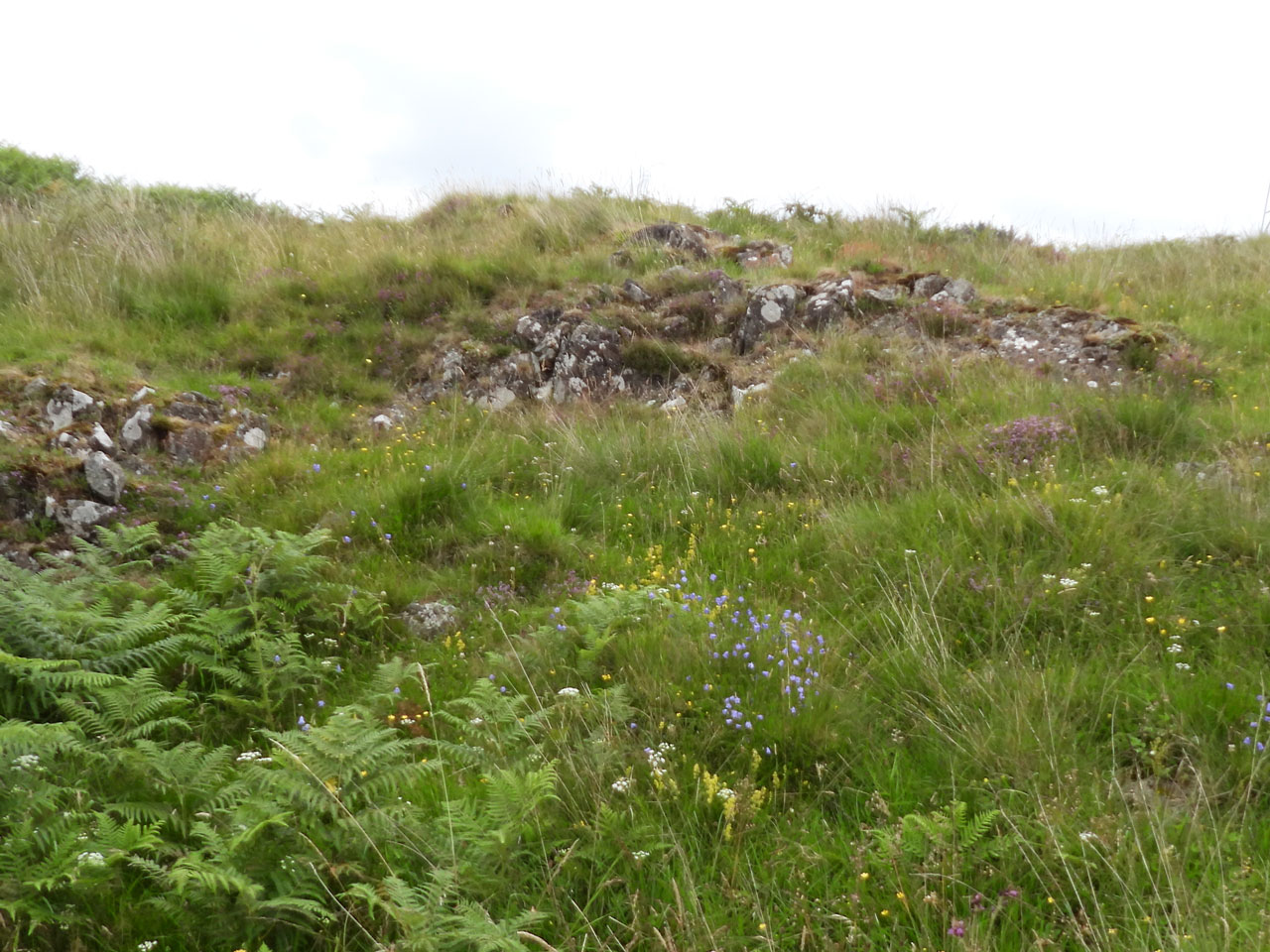
Typically found in less acid but non-calcareous dry coastal slope grasslands, associated with species such as Cladonia foliacea, C. cervicornis, C. rangiformis, C. stereoclada, C. furcata and Pectenia ligulata. [The previous text is from LGBI3, NB these associates may be more typically found with material that appears to be a norstictic acid deficient form of C. symphycarpa misidentified as C. firma. However, true C. firma has been confirmed by sequencing from some rather different inland habitats. These including acid humus on granite slabs in Cornwall and winter damp but summer parched acid humus in the New Forest associated with Cladonia strepsilis, C. subcervicornis, C. zopfii and Pycnothelia papillaria. The New Forest sites are acid but not extremely so and typically have some grass and herb species associated. It also usually occupies drier niches than Cladonia subcervicornis when these related species grow together. One New Forest site is closer to the coastal habitats being a lime enriched dry grassland developing over an old roadway reverting to heathland with Cladonia furcata, C. rangiformis and Lathagrium auriforme (Collema auriforme). Further work in the Lizard heaths, west Cornwall, found that true C. firma was mainly found inland from the coastal grassland in acidic heaths and the material in the coastal grassland and serpentine rock appeared to be largely the from of C. symphycarpa lacking norstictic acid (Sanderson, 2024). Additional discoveries in Kirkcudbrightshire and the Lake District, suggest that C. firma extends quite deep and high into upland moorland on thin humus on flushed rock, often growing with C. subcervicornis.]
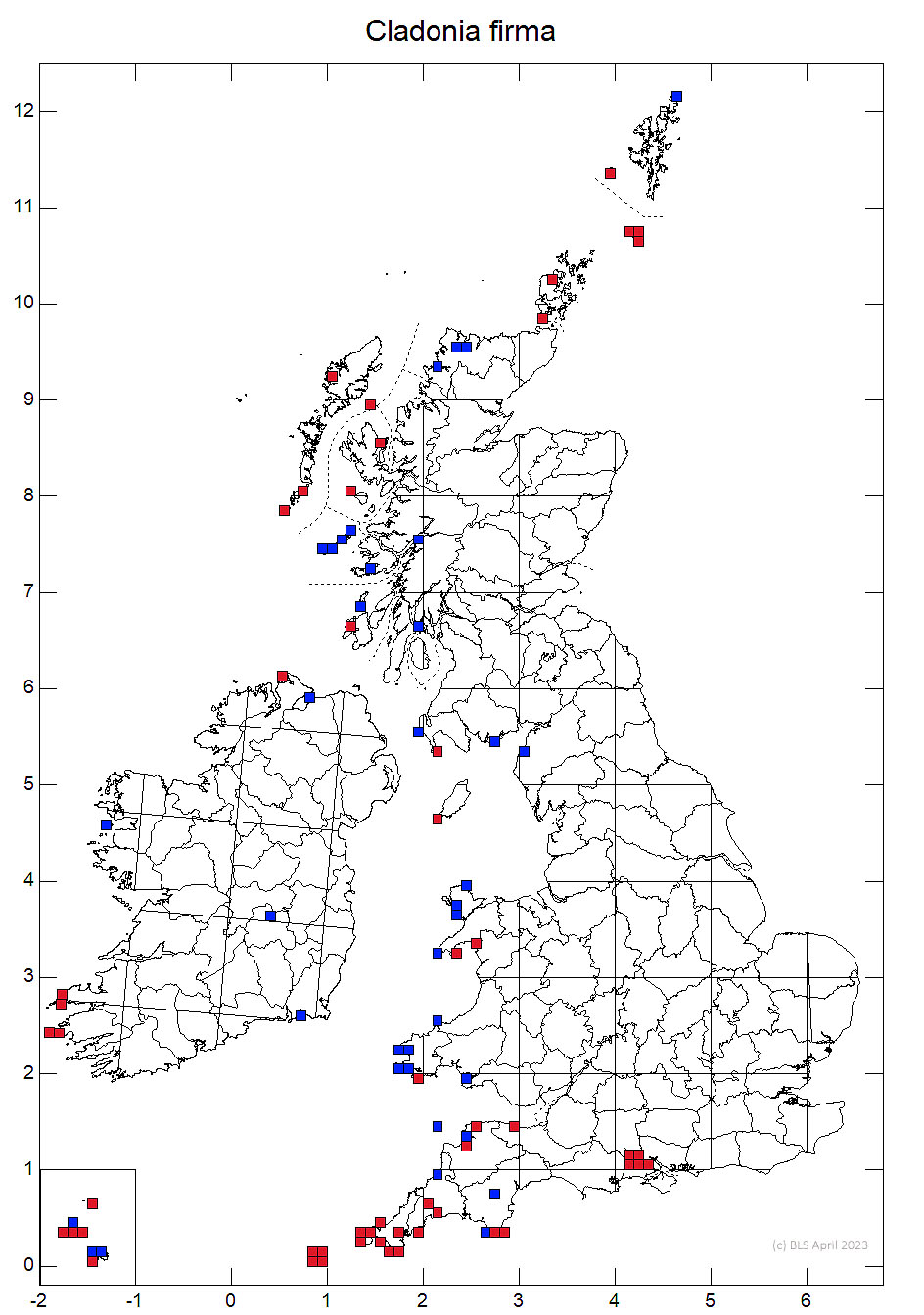

A southern Atlantic – Mediterranean species, mainly found on the west coast of Britain from south Devon to Shetland, and rare (probably under recorded) in coastal Ireland. [The previous text is from LGBI3, NB there is now considerable doubt as to the identity of at least some coastal populations, possibly the majority of the older records, which appear to be of a norstictic acid deficient form of Cladonia symphycarpa. The species has been confirmed by sequencing from inland habitats in Cornwall and the New Forest, Hampshire, possibly rare in the lowlands, but certainly overlooked; in particular it should be searched for on inland rock slabs in the south west of England. Subsequent finds suggest it may also actually extend quite far into the uplands to the north on intermittently flushed rock slabs, where it mat be local but widespread. In coastal habitats, it generally only occurs somewhat inland in non-maritime heaths.]
A rather uncommon species generally found in high quality species rich habitats. Both coastal slope and inland heathland habitats are at least partly dependant on extensive grazing to maintain short open swards and declines or removal of traditional grazing management is a potential threat.
Britain: Notable
Burgaz, A.R., Ahti, T. & Pino-Bodas, R. (2020) Mediterranean Cladoniaceae. Madrid: Spanish Lichen Society.
Pino-Bodas, R., Sanderson, N., Cannon, P., Aptroot, A., Coppins, B., Orange, A. & Simkin, J. (2021). Lecanorales: Cladoniaceae, including the genera Cladonia, Pilophorus and Pycnothelia. Revisions of British and Irish Lichens 19: 1-45. Link
Sanderson, N. A. (2024) Lichen Survey for Lizard SRP Project, 2024, Final Report. A Botanical Survey & Assessment report to English Nature.
Text by Neil A Sanderson, based Pino-Bodas et al (2021)