Hypotrachyna revoluta s. lat.
Hypotrachyna revoluta
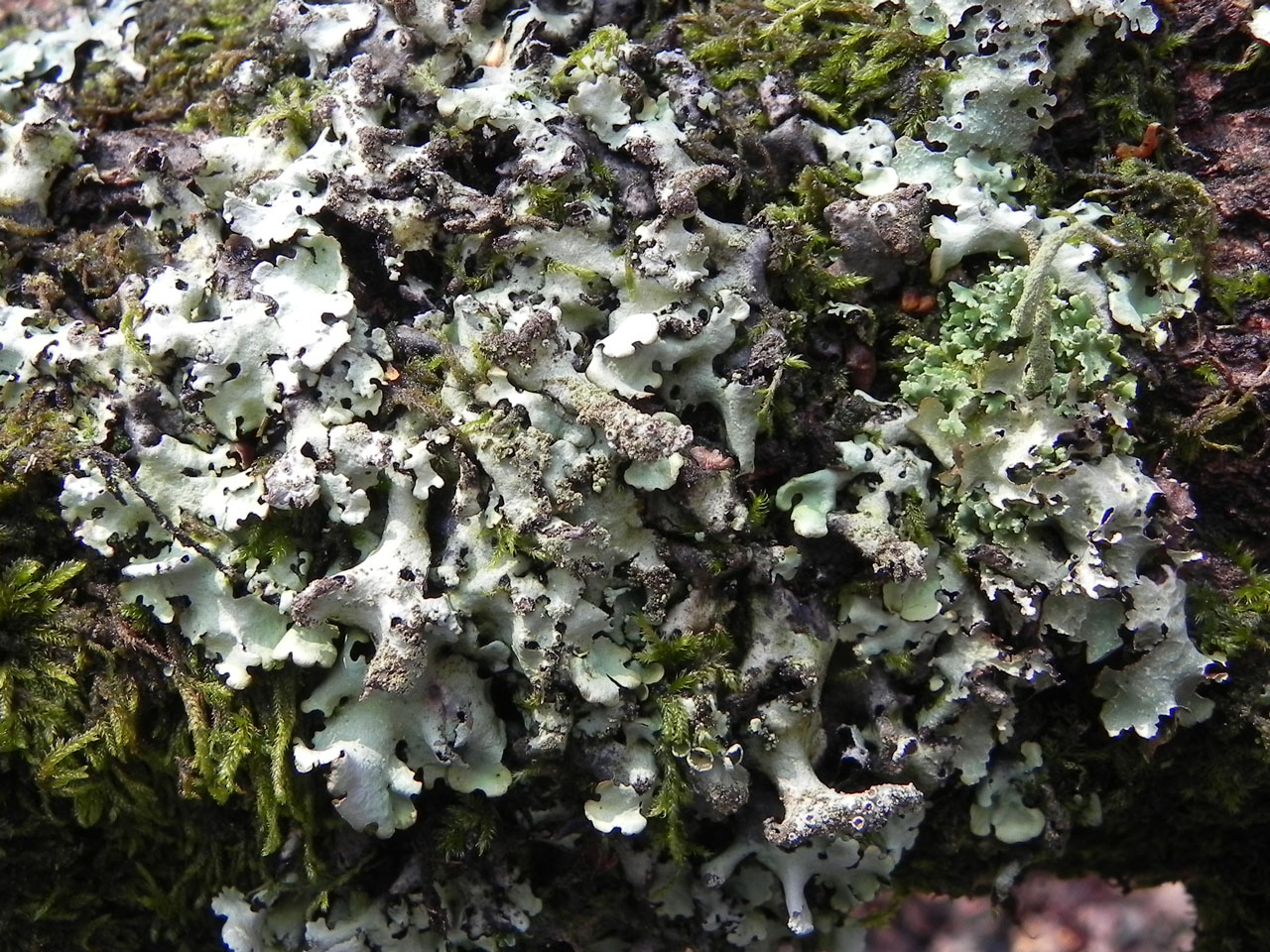
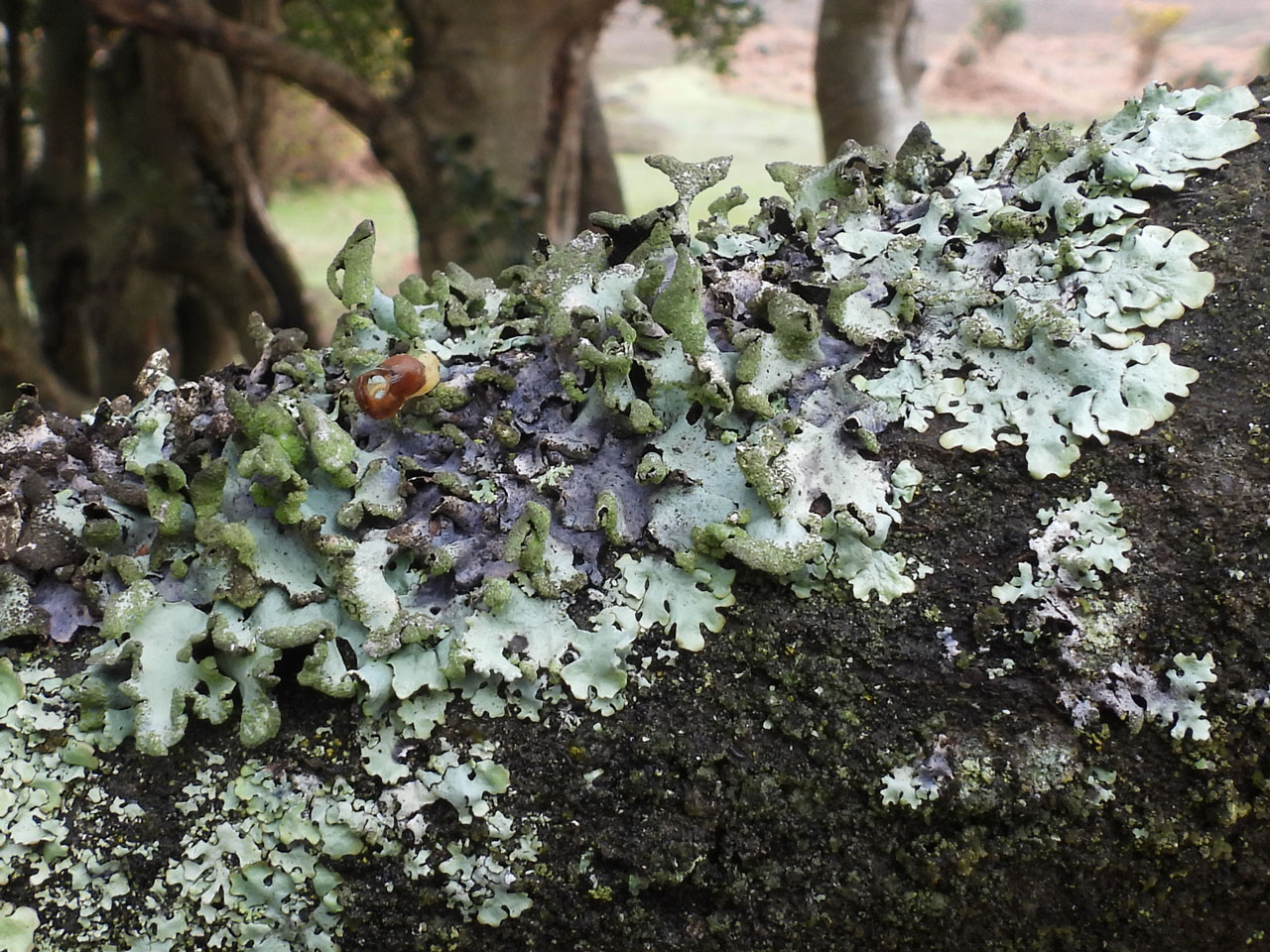
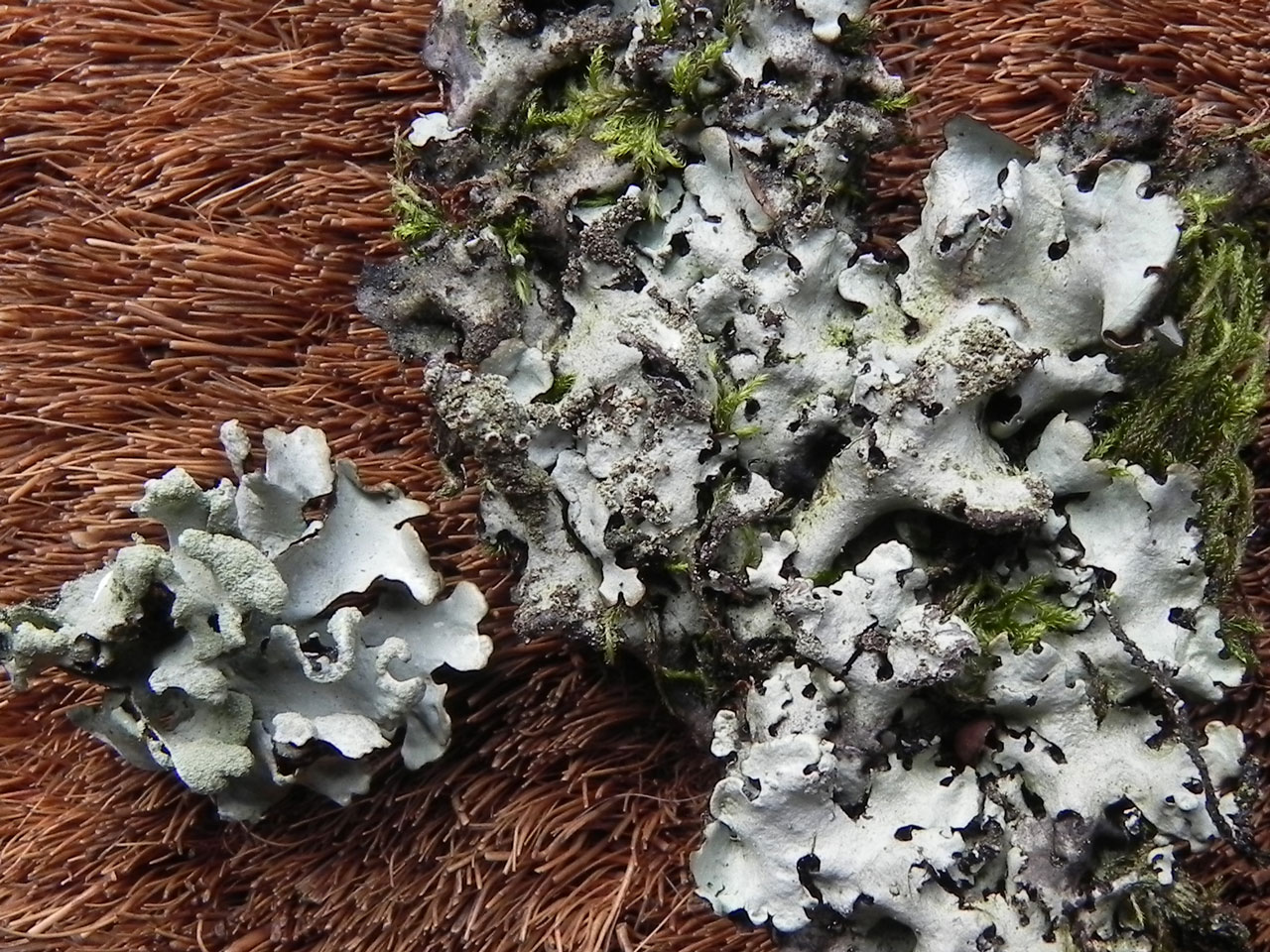
This aggregate taxa is now separated into Hypotrachyna revoluta s. str. and Hypotrachyna afrorevoluta. These can be easily separated when mature by the positioning of the soralia and from the form of the lobes. Young material however can not be separated.
Hypotrachyna afrorevoluta is similar to Hypotrachyna revoluta s. str. but with marginal lobes that are not raised, and it has more laminal pustulate soralia derived from break-up of the upper cortex. The soredia are larger and more granular than those in H. revoluta. On H. revoluta the marginal lobes are raised with the finer soredia irregularly spreading, ± diffuse, mainly on, or near, the lobe ends.
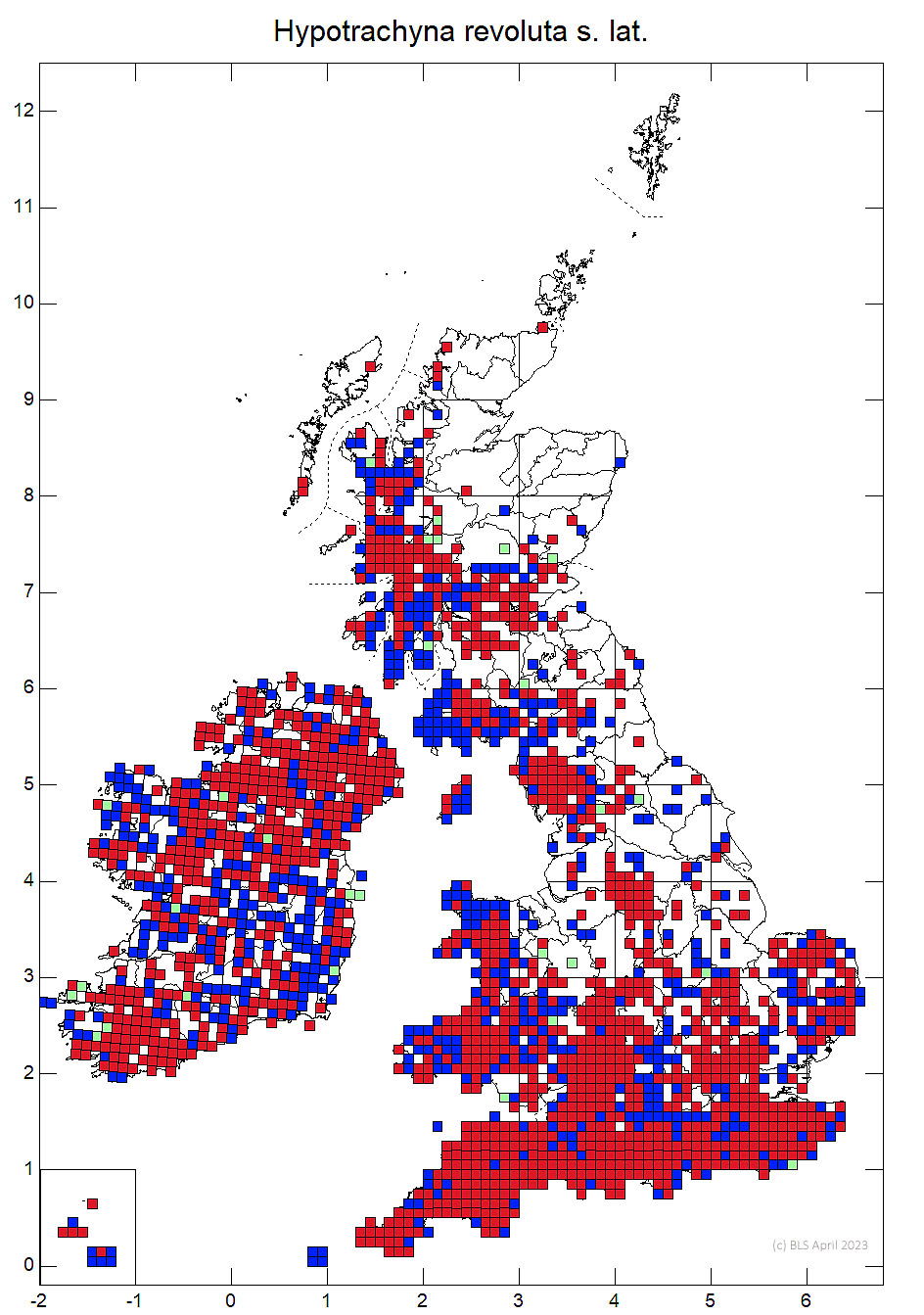

Cannon, P., Divakar, P., Yahr, R., Aptroot, A., Clerc, P., Coppins, B., Fryday, A., Sanderson, N. & Simkin, J. (2023). Lecanorales: Parmeliaceae, including the genera Alectoria, Allantoparmelia, Arctoparmelia, Brodoa, Bryoria, Cetraria, Cetrariella, Cetrelia, Cornicularia, Evernia, Flavocetraria, Flavoparmelia, Hypogymnia, Hypotrachyna, Imshaugia, Melanelia, Melanelixia, Melanohalea, Menegazzia, Montanelia, Nesolechia, Parmelia, Parmelina, Parmeliopsis, Parmotrema, Platismatia, Pleurosticta, Protoparmelia, Pseudephebe, Pseudevernia, Punctelia, Raesaenenia, Tuckermannopsis, Usnea, Vulpicida and Xanthoparmelia. Revisions of British and Irish Lichens 33: 1-98.
Text by N A Sanderson, based on Cannon et al (2023)