Lecanora sublivescens
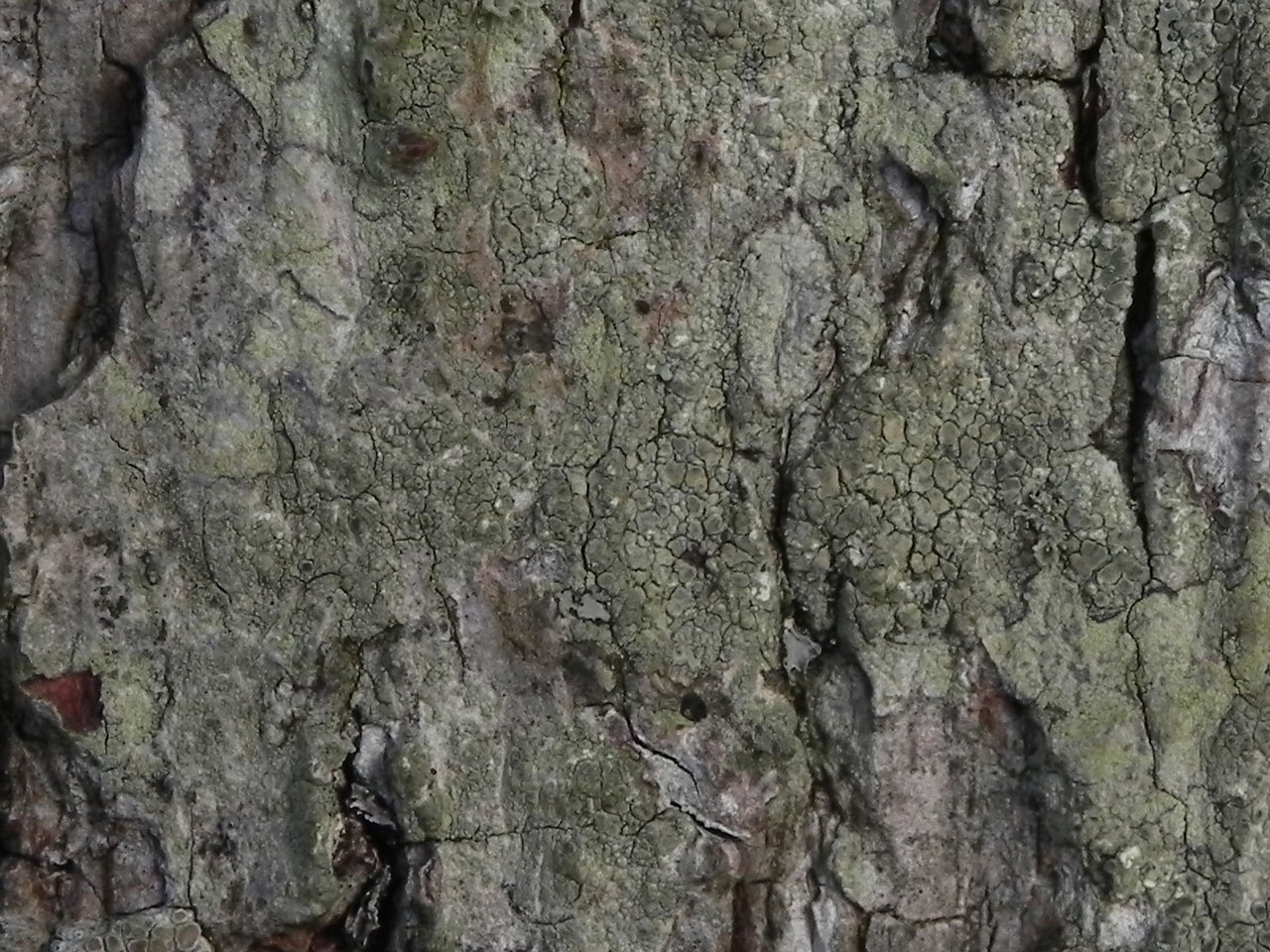


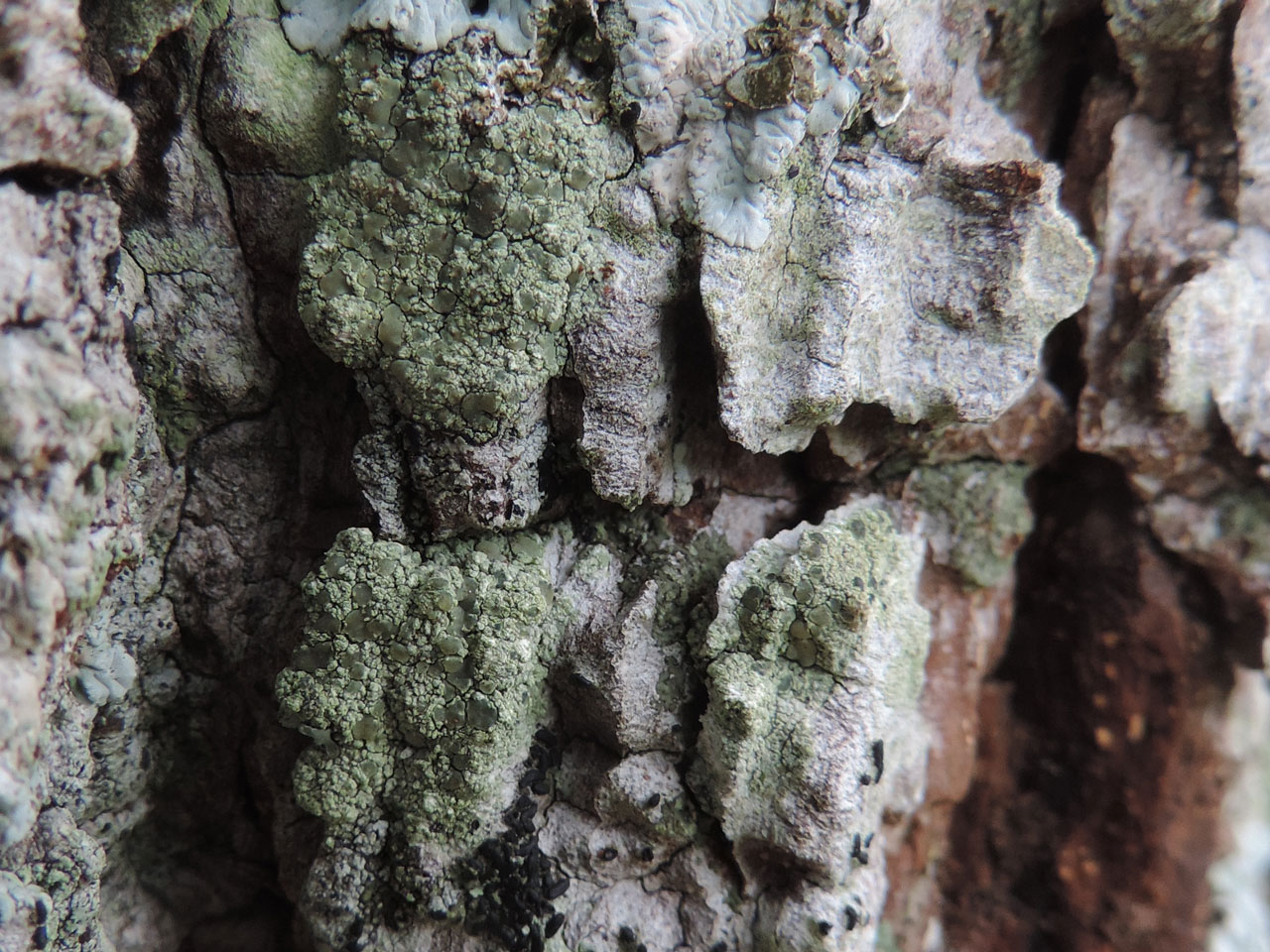


This Zeora (Lecanora symmicta group), species recalls a pale and poorly developed Zeora sulphurea (Lecanora sulphurea) but is found on mesic bark on veteran Oaks in open pasture woodlands and in parkland and on field trees in southern Britain. It is internationally rare sub-oceanic species with most of the world population found in Sweden and England and Wales. It has an intricate areolate thallus with innate apothecia, often convoluted, with a greenish-yellow to pink-brown discs often flecked black.
Thallus areolate, dispersed or forming a continuous crust, areoles flattened with somewhat irregular margins, pale yellow green, surface ± smooth to granular; prothallus inconspicuous. Apothecia 0.5–1.0 mm diam., dispersed to compacted, arising on single areoles, at first immersed but becoming almost sessile; thalline margin visible only when young, becoming level with the disc and soon excluded; disc concave or more commonly convex to undulate, often convoluted, greenish-yellow to pink-brown often flecked black; epithecium ± colourless, sparsely interspersed with brown granules; hymenium 40–65 µm tall; paraphyses 1–2 µm diam., branched and anastomosed, the apices not thickened. Ascospores 10–14 (–15) × 4–5 µm, narrowly ellipsoidal. Thallus C–, K+ weakly brownish yellow, KC+ yellow, Pd–, UV+ dull orange (atranorin, gangaleoidin, thiophanic acid, zeorin, α-collatolic and usnic acids).
A member of the Lecanora symmicta group, which was transferred to the segregate genus Zeora Fr. by Ivanovich et al. (2025). This transfer required the reversion to the earlier species name of straminea, giving the name Zeora straminea. Recalling a pale and poorly developed Z. sulphurea with a thin thallus and smaller apothecia. Zeora symmicta (Lecanora symmicta) on tree bark can look similar, but the thallus lacks the intricate cracking given by the areoles on Z. sublivescens.
On flushed mesic bark often at the junction with dry bark of veteran Oak, rarely on other tree species in open pasture woodland and especially old parklands but also on old field trees in less polluted farmland. Found in a high quality veteran tree varient of the Mature Mesic Bark Community (Pertusarietum amarae). This habitat also supports species rarer species such as Blastenia coralliza, Blastenia herbidella s. str., Blastenia ferruginea s. str., Caloplaca lucifuga and Lecanoropsis quercicola (Lecanora quercicola).
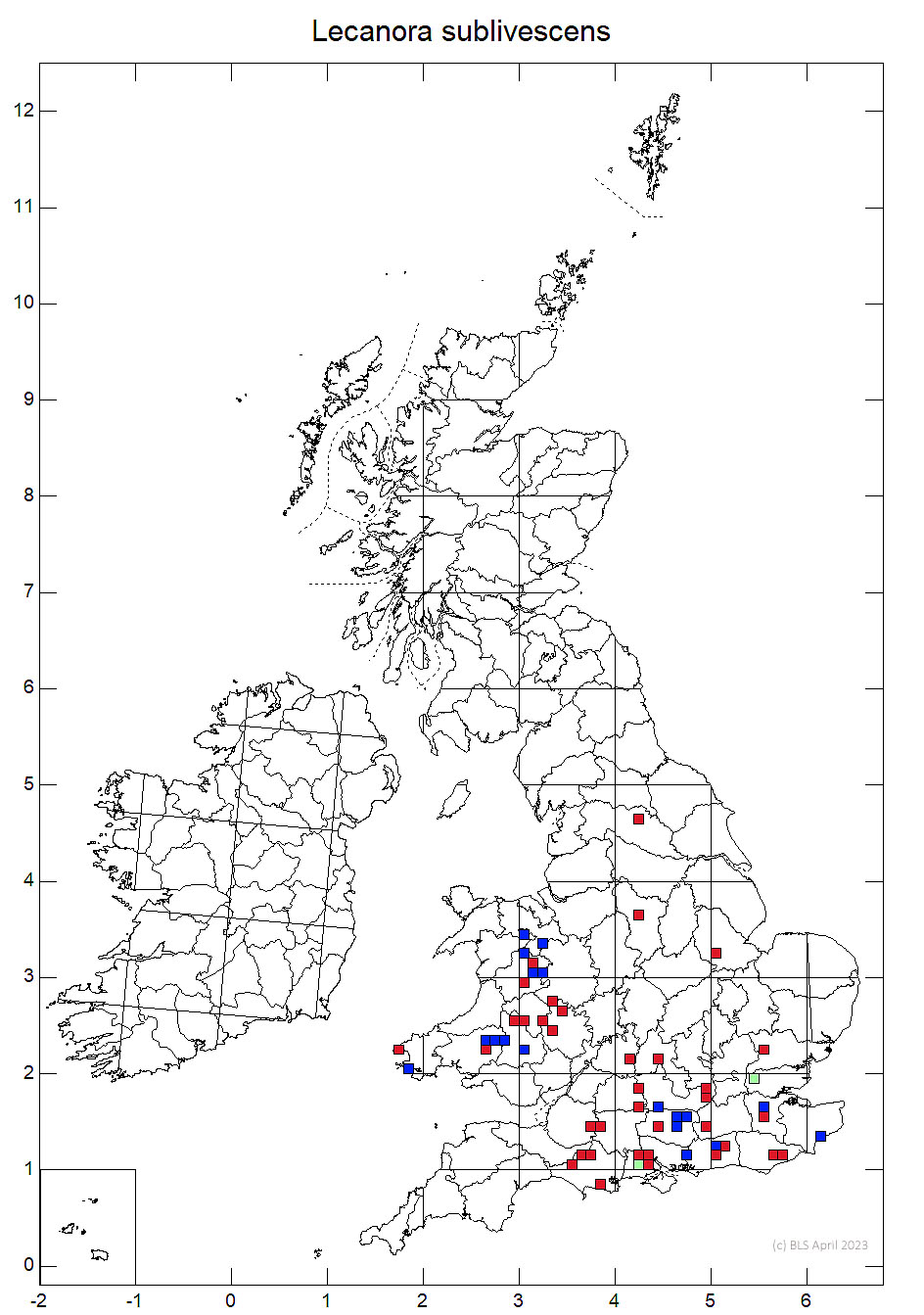
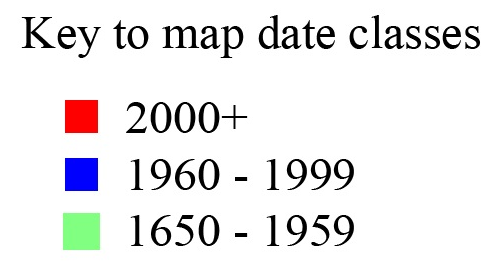
Rare and very local, S. England and Wales. A very rare relic species in the Midlands and North England.
A rather rare European endemic known mainly from sites with frequent veteran Oak in Sweden and southern Britain link. Very rare beyond, with a substantial proportion of the known world population found in England and Wales. A sub-oceanic species, which is likely to have lost a lot of habitat to sulphur dioxide pollution since the 19th century in central England and many of the surviving sites are now threatened by increasing ammonia pollution. Loss of old trees and Ivy overgrowth are also threats.
Britain: Near Threatened & an International Responsibility species
Wales: Near Threatened & Section 7 Species
England: Section 41 Species
Cannon, P., Malíček, J., Ivanovich, C., Printzen, C., Aptroot, A., Coppins, B., Sanderson, N., Simkin, J. & Yahr, R. (2022). Lecanorales: Lecanoraceae, including the genera Ameliella, Bryonora, Carbonea, Claurouxia, Clauzadeana, Glaucomaria, Japewia, Japewiella, Lecanora, Lecidella, Miriquidica, Myriolecis, Palicella, Protoparmeliopsis, Pyrrhospora and Traponora. Revisions of British and Irish Lichens 25: 1-83.
Ivanovich-Hichins, C., Weber, L., Li, L., Leavitt, S. D., Muggia, L., Palice, Z., Pérez-Ortega, S., Sohrabi M., Printzen, C. (2025) New phylogenetic insights into the lichen genus Lecanora s. lat. (Lecanoraceae, Ascomycota): resurrection of the genera Glaucomaria, Straminella and Zeora. The Lichenologist. 57: 278-303.
Text by Neil A Sanderson based on Cannon et al (2022)